An Indian-American military surgeon has played a crucial role in a groundbreaking minimally invasive procedure that removed a large brain tumor without the need for traditional open brain surgery. Major Jagatkumar Patel, an anterior skull base surgeon at Walter Reed National Military Medical Center near Washington, worked alongside neurosurgeon Lt. Col. Charles Miller to successfully treat US Marine Corps Staff Sergeant Andy Archer.
According to the US Department of Defense, Archer had been living with a benign brain tumor for nearly 15 years. The tumor, measuring approximately 4.4 centimeters, was positioned near the front of his pituitary gland and had begun putting pressure on his optic nerve. The surgical team performed the procedure earlier this month, successfully removing more than 99% of the tumor while leaving behind a very small portion that was considered too dangerous to remove completely.
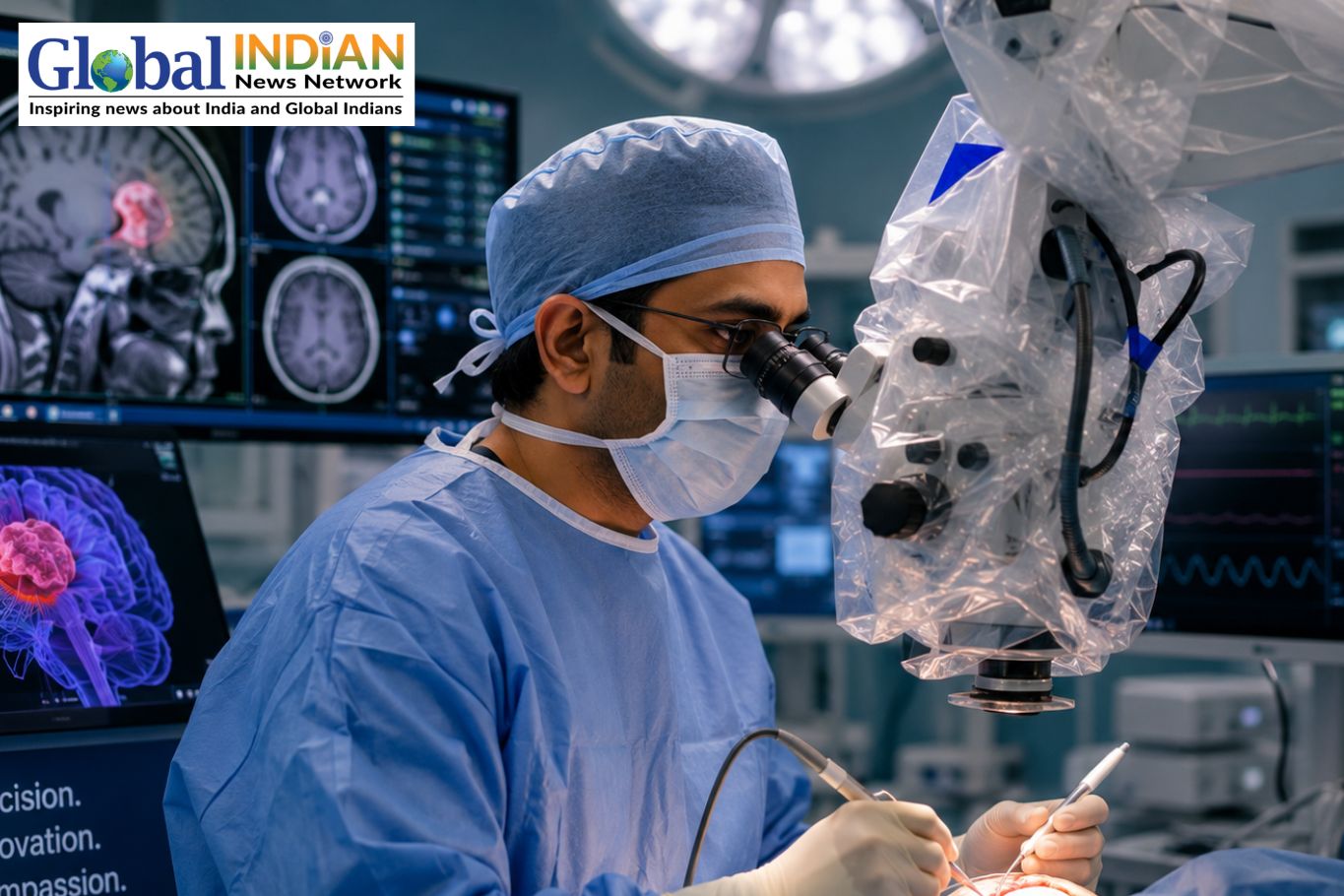
Major Patel developed a specialized surgical approach based on Archer’s unique nasal anatomy, creating a precise pathway through the nasal passages using advanced endoscopic techniques. This approach allowed the surgeons to access the tumor without making a large opening in the skull.
The procedure required close coordination between Patel and Miller. After establishing the surgical route, Patel used a high-definition endoscopic camera to provide detailed visuals of the operating area, allowing Miller to carefully remove the tumor while protecting nearby critical structures.
Patel explained that for appropriately located tumors, accessing the brain through the nose can provide better surgical access and reduce the need for more invasive procedures. The technique allowed the medical team to achieve an effective removal while minimizing risks for the patient.
A small portion of the tumor remained attached near the optic nerve because removing it could have caused serious complications, including vision loss or other neurological damage. The doctors determined that leaving the remaining fragment was the safest option and believed it had a very low chance of future growth.
To complete the operation, the surgeons repaired the skull base using a tissue graft taken from Archer’s leg to close the surgical area. The Defense Department reported that just two days after surgery, Archer showed no outward signs of undergoing a major brain procedure. His vision was already improving, and his recovery involved only expected headaches and discomfort from the graft site.
The successful operation highlights advances in modern neurosurgery and showcases the contributions of Indian-American medical professionals to innovative healthcare solutions in the United States.