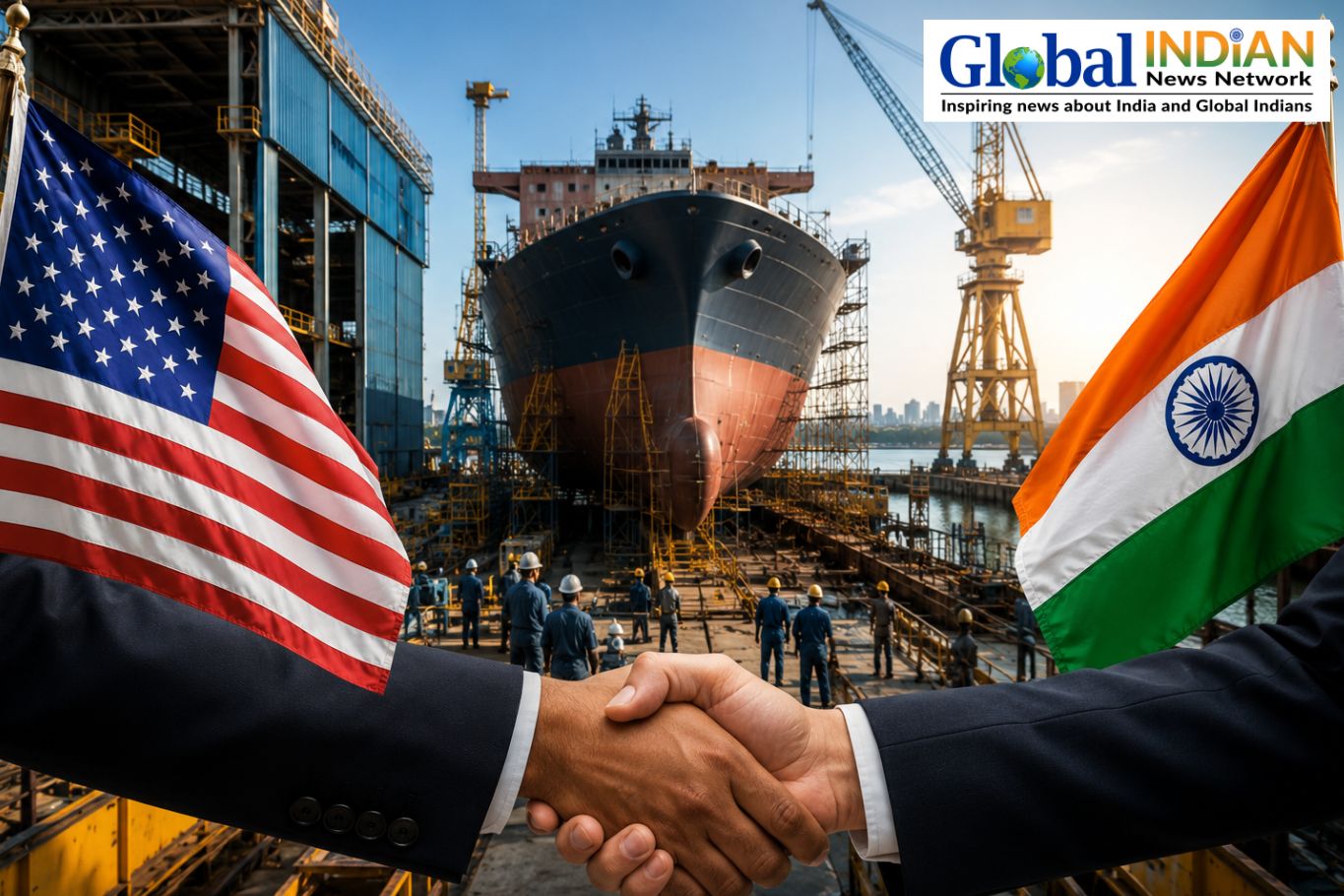
India has emerged as a promising partner in the United States’ long-term strategy to reduce reliance on China’s dominant shipbuilding industry, according to discussions held during a congressional hearing focused on maritime security and industrial competitiveness. American lawmakers and policy experts highlighted India’s growing shipbuilding potential, placing it alongside Japan and South Korea as part of a broader alliance aimed at strengthening global maritime production outside China.
The topic was examined during a hearing of the House Foreign Affairs Subcommittee on East Asia and the Pacific, where officials assessed the strategic risks associated with China’s overwhelming control of commercial shipbuilding. Participants argued that Beijing’s extensive maritime manufacturing capabilities not only support its economy but also reinforce its expanding naval power, creating long-term challenges for the United States and its allies.
Matthew Funaiole, Vice President at the Center for Strategic and International Studies (CSIS), said Washington should deepen cooperation with trusted partners, including Japan, South Korea, and India, to build stronger shipbuilding capacity over time. He noted that India is becoming an increasingly important participant in the global shipbuilding sector and could play a valuable role in creating a diversified and resilient maritime industrial network outside China.
The hearing, titled Charting a New Course: Countering China’s Dominance in Global Shipbuilding, explored how China’s state-supported shipbuilding industry has reshaped global supply chains and influenced security dynamics across the Indo-Pacific. Lawmakers emphasized that China’s commercial shipyards and military shipbuilding efforts are closely linked, allowing commercial revenues to strengthen the country’s naval modernization.
Subcommittee Chair Young Kim pointed out that China now accounts for more than half of global commercial shipbuilding, while the United States represents only a small fraction of worldwide production. She warned that Western companies using Chinese shipyards indirectly contribute to Beijing’s naval expansion through its integrated industrial strategy.
Representative Ami Bera stressed that the United States does not need to address the challenge alone. Instead, he advocated working closely with allies that possess advanced maritime expertise, particularly Japan and South Korea, while expanding partnerships with emerging contributors such as India. He said coordinated investments, technology sharing, and workforce development would be critical to rebuilding competitive shipbuilding capacity.
Experts also cautioned that reducing China’s dominance will require a sustained, long-term effort rather than immediate competition. Recommendations included improving transparency across global maritime industries, investing in advanced shipbuilding technologies, and aligning industrial policies among allied nations over several decades.
Additional proposals discussed during the hearing included strengthening cooperation among maritime-focused countries, encouraging allied investment in American shipyards, and using trade measures, export controls, port fees, and targeted sanctions to reduce dependence on Chinese shipbuilding. Collectively, these initiatives aim to build a more resilient global maritime network while enhancing economic security and strategic cooperation across the Indo-Pacific.