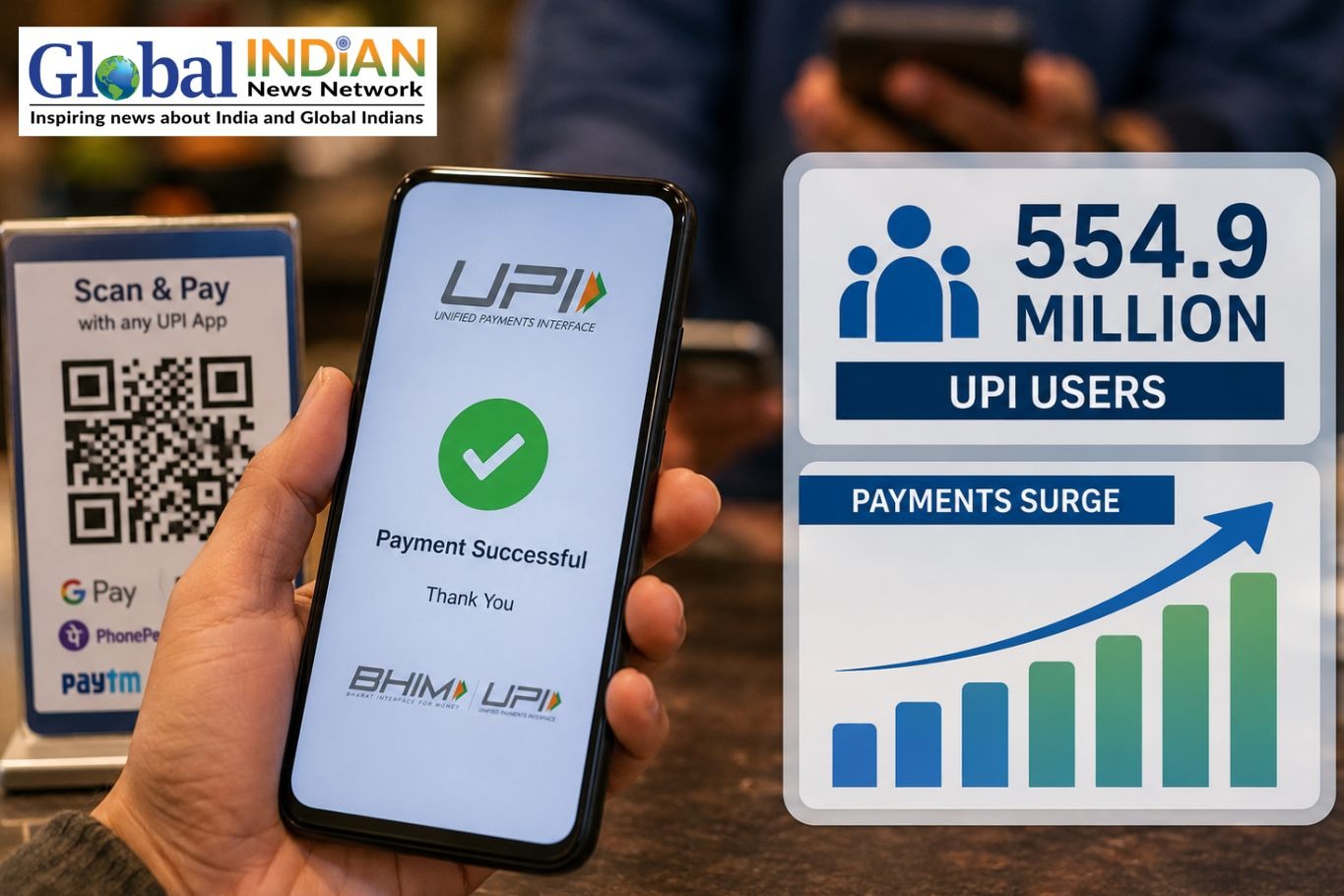
India’s Unified Payments Interface (UPI) continued its remarkable growth trajectory, strengthening the country’s position as a global leader in digital payment innovation. The platform onboarded 554.9 million users by June 2026, reflecting the rapid adoption of cashless payment solutions among individuals, businesses, and financial institutions.
According to data from the National Payments Corporation of India (NPCI), UPI processed 24.16 billion transactions during the financial year 2026, with the total transaction value reaching $3.56 trillion. The latest figures highlight consistent expansion over the past five years, demonstrating the growing dependence on real-time digital payments across India.
UPI transaction volumes have increased significantly from 4.59 billion transactions in FY22 to more than 24.16 billion transactions in FY26. During the same period, the overall value of transactions climbed from $1.13 trillion to $3.56 trillion, marking substantial growth in both usage and financial activity conducted through the platform.
The Indian government, the Reserve Bank of India (RBI), and NPCI have continued efforts to strengthen the security, reliability, and transparency of the UPI ecosystem. Several measures have been introduced to protect users and improve payment safety, including risk-based transaction limits, additional safeguards against unauthorized mobile number changes, stronger security standards for UPI applications, and the rollout of the Comprehensive UPI Information Security Framework (CUISF) 2025.
Beyond domestic expansion, India has also focused on taking its digital payment infrastructure to international markets through NPCI International Payments Limited (NIPL). These initiatives have enabled smoother cross-border Person-to-Person (P2P) money transfers and Person-to-Merchant (P2M) payments, making digital transactions more accessible for travelers, businesses, and the Indian diaspora worldwide.
UPI services are currently supported through 12 international payment partnerships across countries including Bhutan, Singapore, the United Arab Emirates, France, Mauritius, Sri Lanka, Nepal, Qatar, Greece, and Cambodia. These collaborations are helping partner nations establish and expand their own real-time payment ecosystems while increasing the global acceptance of India’s digital payment technology.
With continued investments in security, innovation, and international cooperation, UPI is expected to play a larger role in advancing financial inclusion, strengthening India’s Digital Public Infrastructure, and positioning the country as a key force in the global digital payments landscape.