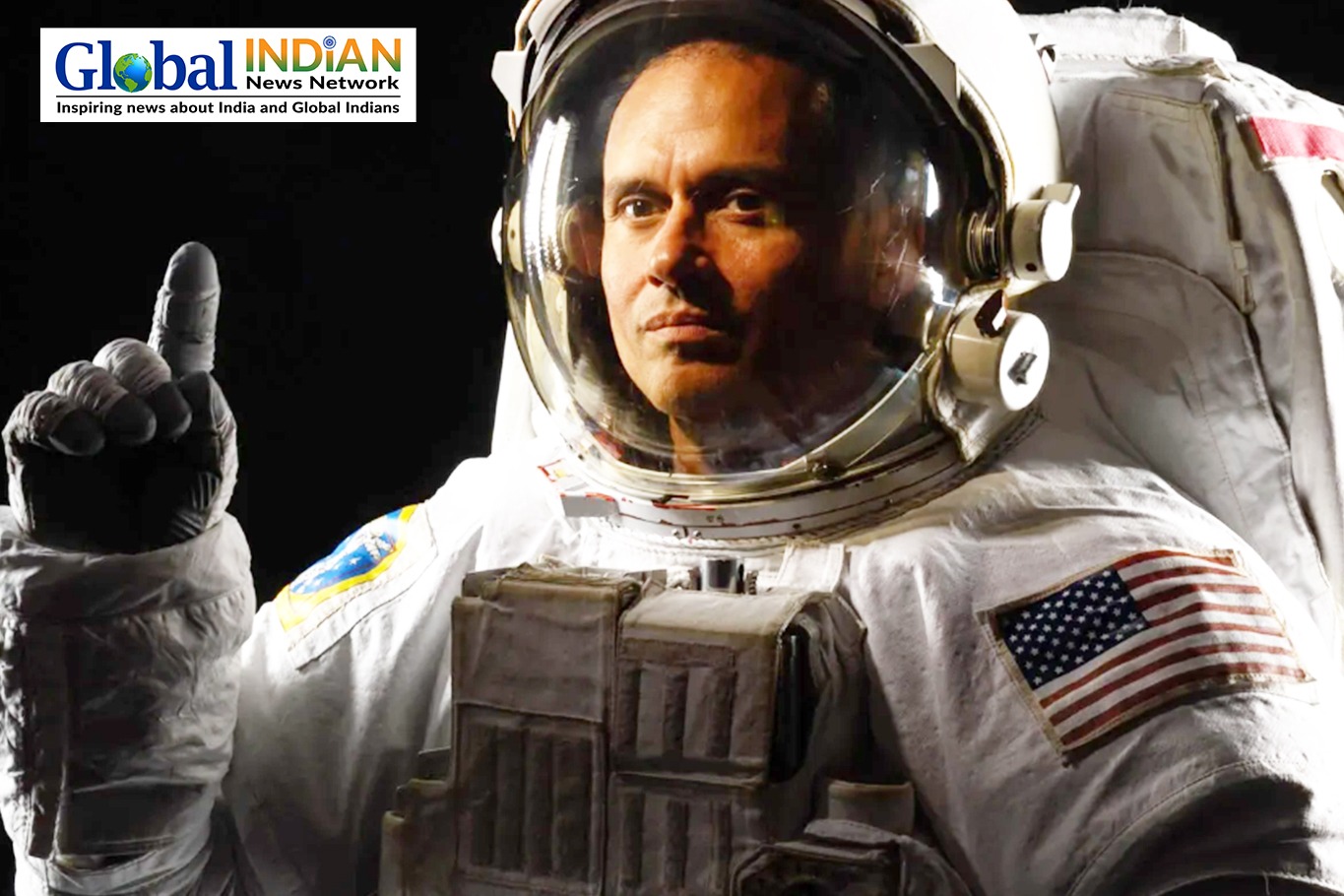
 Indian-origin NASA astronaut Anil Menon has officially begun his first mission to the International Space Station (ISS), reaching a significant milestone in a career that combines medicine, engineering, military leadership, and human spaceflight. Traveling aboard the Soyuz MS-29 spacecraft, Menon joins an international crew for an approximately eight-month mission focused on scientific research and technological advancement in space.
Born on October 15, 1976, in Minneapolis, Minnesota, Menon comes from a diverse cultural background. His father immigrated from India, while his mother has Ukrainian roots. Throughout his professional journey, he has built an impressive reputation as an emergency physician, aerospace medicine expert, U.S. Space Force colonel, and NASA astronaut.
His academic achievements reflect a strong foundation in both science and medicine. Menon earned a degree in Neurobiology from Harvard University before completing a Master’s degree in Mechanical Engineering and a Doctor of Medicine at Stanford University. He later expanded his expertise by earning a Master of Public Health in Aerospace Medicine, focusing on the unique medical challenges associated with human space exploration.
Before joining NASA’s astronaut corps, Menon contributed to disaster relief efforts following devastating earthquakes in Haiti and Nepal. He also served with the U.S. Air Force, providing medical care to injured military personnel. His passion for exploration extends beyond medicine, as he has successfully climbed Mount Everest, demonstrating exceptional endurance and determination.
Menon’s experience in aerospace medicine also led him to SpaceX, where he became the company’s first Director of Medical Operations and Crew Flight Surgeon. In that role, he played a key part in developing medical systems for NASA’s Commercial Crew Program while supporting landmark missions, including Demo-2, Crew-1, and Inspiration4.
His NASA journey began in 2014 when he joined the agency as a flight surgeon, helping oversee astronaut health, mission planning, and medical support for long-duration space expeditions. In 2021, NASA selected him as part of Astronaut Group 23. After nearly two years of intensive training, he officially qualified as a NASA astronaut in 2024.
Now aboard the ISS alongside Russian cosmonauts Pyotr Dubrov and Anna Kikina, Menon will participate in research involving human health, medical technologies, and semiconductor manufacturing in microgravity. The findings are expected to support future exploration missions to the Moon and Mars while contributing to innovations that could benefit life on Earth.