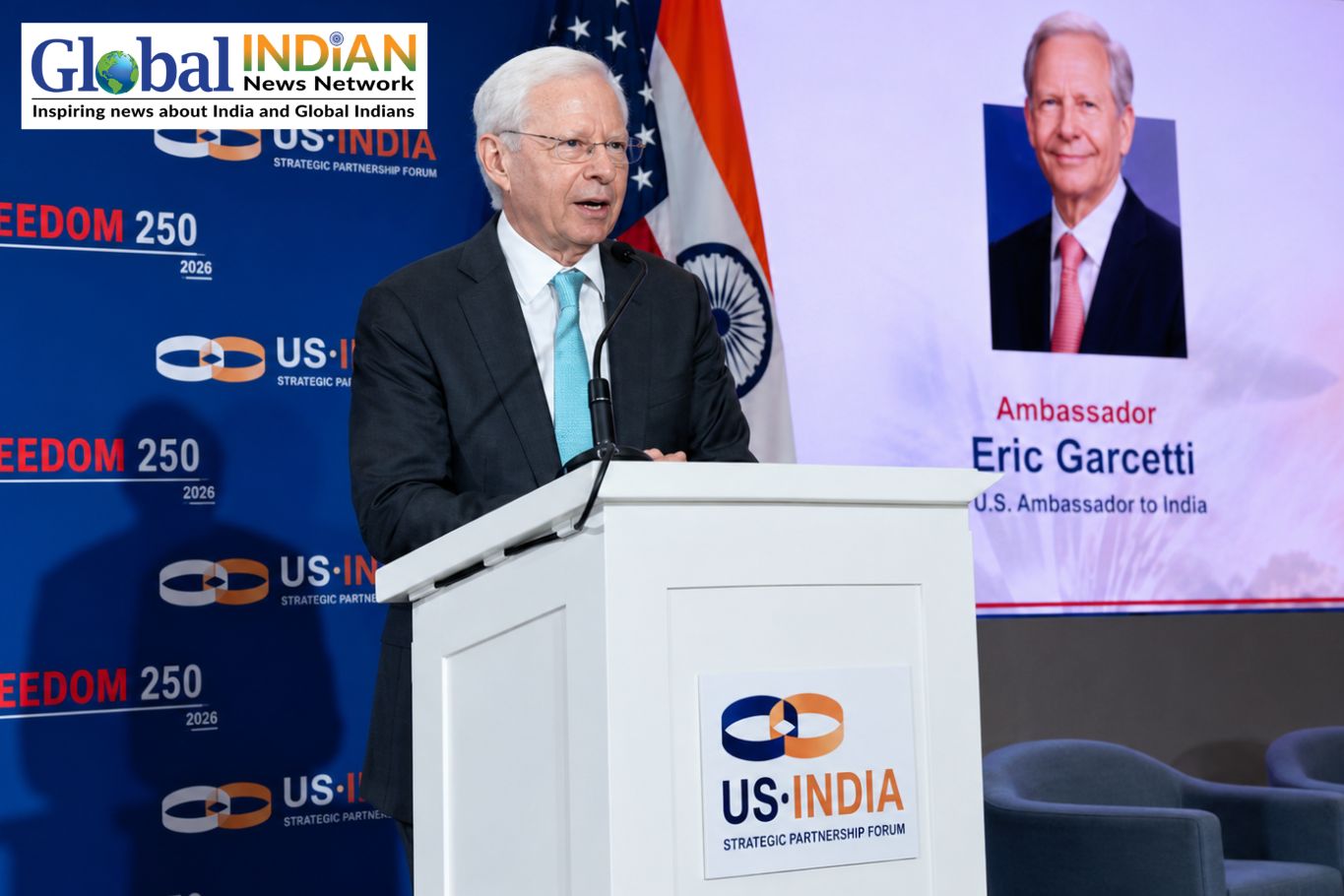
 People-to-people connections have played a defining role in strengthening the relationship between India and the United States, according to former US Ambassador to India Kenneth I. Juster. Addressing the US-India Strategic Partnership Forum (USISPF) Leadership Summit in Washington, Juster described these human connections as the “secret sauce” that has helped both countries maintain strong ties despite occasional diplomatic challenges over the decades.
Reflecting on the long-standing relationship, Juster said the partnership stretches back centuries, well before the modern era of strategic cooperation. He pointed out that the United States established diplomatic missions in Calcutta in 1792 and Madras in 1794, making India one of the earliest destinations for American diplomatic engagement outside the country. He also noted that the US established formal relations with India’s interim government in September 1946, months before India officially gained independence.
Juster explained that bilateral ties accelerated following India’s economic reforms in 1991 but faced a temporary setback after the country’s nuclear tests in 1998. However, diplomatic discussions between senior officials from both nations helped rebuild trust, ultimately leading to President Bill Clinton’s landmark visit to India in 2000. He said this period laid the foundation for a much stronger strategic partnership.
Successive US administrations continued to expand cooperation with India. Juster highlighted the civil nuclear agreement and technology collaboration under President George W. Bush, India’s designation as a major defense partner during Barack Obama’s presidency, the revival of the Quad and the launch of the 2+2 ministerial dialogue under President Donald Trump’s first administration, and the elevation of Quad meetings to the leaders’ level during President Joe Biden’s term.
He added that the current US administration is focused on enhancing defense cooperation, energy security, and concluding the first bilateral trade agreement between the two countries. Trade has already grown significantly, increasing from $19 billion in 2001 to nearly $250 billion today. Both governments are now aiming to expand bilateral trade to $500 billion by the end of the decade, with a comprehensive trade deal expected to support that goal.
Juster emphasized that collaboration now extends across defense, healthcare, education, science, technology, agriculture, energy, investment, space, and counterterrorism. He also praised the contributions of more than 5 million Indian Americans, saying their influence has strengthened the partnership in countless ways. His remarks came ahead of the launch of USISPF’s commemorative book, We the People: 250 Voices That Have Shaped the U.S.-India Relationship, which celebrates the individuals whose efforts have shaped the enduring friendship between the two democracies.