 The importance of educating Hindu families and younger generations emerged as a central theme during HUA Samvāda 2026, an event organized by the Hindu University of America (HUA). Participants stressed that fostering a deeper understanding of Hindu philosophy and traditions is vital for preserving cultural identity within the expanding Indian-American community.
The gathering brought together students, educators, and community leaders to discuss how individuals can move beyond simply practicing rituals to developing a thoughtful understanding of the principles behind them. Speakers noted that this transition enables people to explain and represent their faith with greater clarity and confidence.
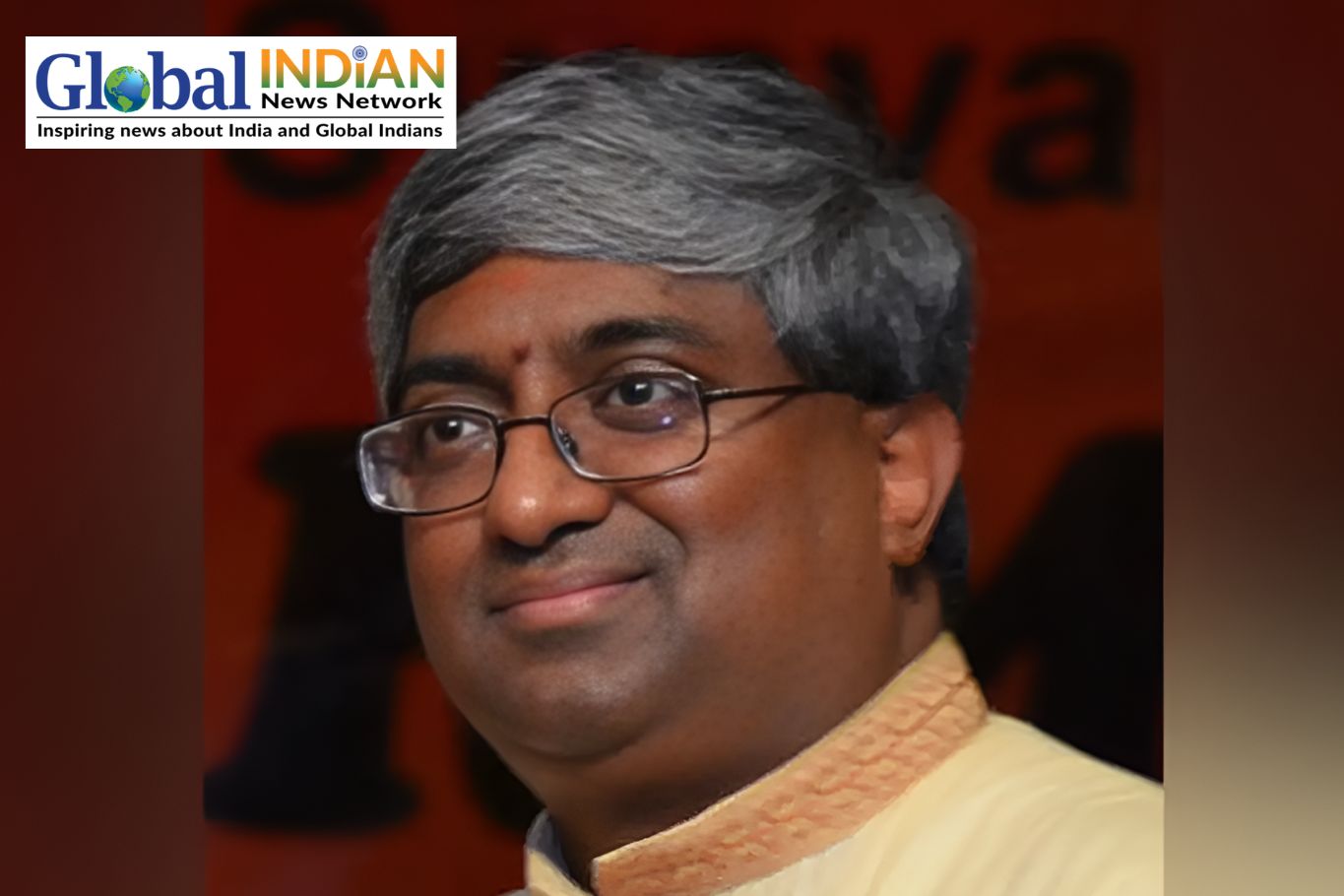
The program included a keynote address by HUA President Kalyan Viswanathan, followed by a panel discussion titled, “From Practice to Understanding to Articulation: How HUA Nurtures Confident Hindus.” The conversation was moderated by Dr. Archana Shyamsunder and featured HUA students Muktha Tyagarajan, Aparna Dave, and Varadarajan Atur.
Shyamsunder observed that many Hindus faithfully participate in devotional practices and ceremonies without fully understanding the philosophical foundations supporting those traditions. According to her, HUA offers a platform where students can engage seriously with ancient knowledge systems and gain insights into the purpose and meaning behind long-standing customs.
Tyagarajan shared that her educational experience at the university encouraged her to revisit assumptions she had accepted throughout her life. Having completed numerous courses, she described the journey as an opportunity to ask questions and explore dimensions of Hindu thought she had not previously considered.
Aparna Dave, an immigration attorney based in Maryland, explained that studying at HUA deepened her appreciation of Hindu philosophy and strengthened her connection to her cultural heritage. She emphasized that many second-generation Indian-American children growing up in the United States often seek logical explanations rather than unquestioned instructions regarding religious practices.
Dave argued that parents and community members must first educate themselves if they hope to effectively guide younger generations. Without a solid understanding of Hinduism, she suggested, passing on meaningful knowledge becomes increasingly difficult.
Viswanathan also highlighted the need for greater Hindu representation in academic fields such as humanities and social sciences. He encouraged increased participation in institutions that shape cultural and intellectual discourse. According to him, HUA seeks to prepare future scholars, educators, advocates, and leaders who can engage confidently in conversations surrounding Hindu traditions and civilization.
Defining what it means to be a “confident Hindu,” Tyagarajan concluded that true confidence stems from knowledge, moral clarity, and the commitment to live according to one’s understanding of dharma.