 Prime Minister Narendra Modi showcased India’s rich cultural heritage by presenting a collection of traditional Indian gifts to Nordic leaders during meetings held alongside the third India Nordic Summit in Norway. The carefully selected gifts reflected India’s artistic diversity, craftsmanship, and cultural symbolism while also highlighting shared values and connections between India and Nordic nations.
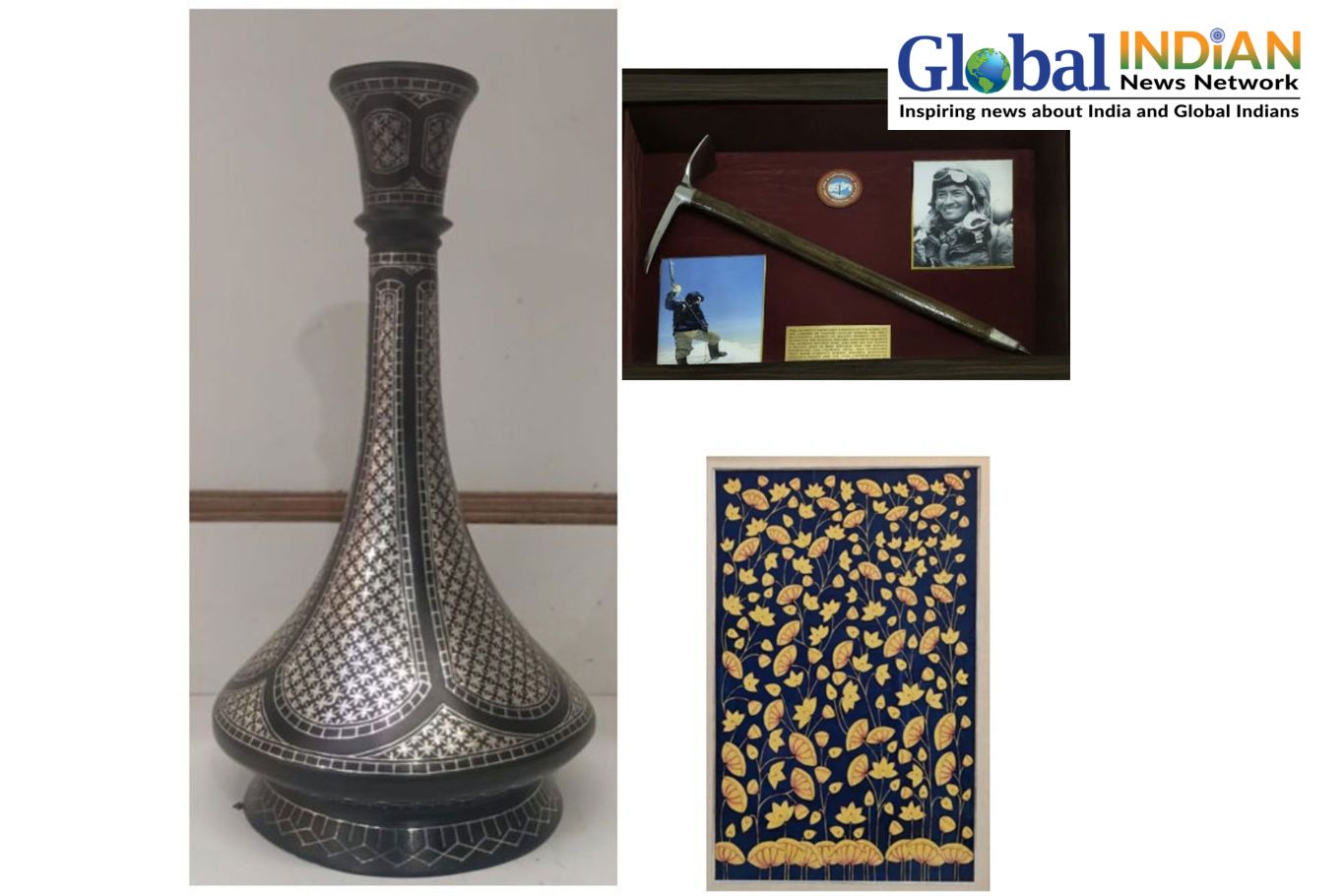
During his interaction with Finnish Prime Minister Petteri Orpo, Modi presented a Kamal Talai Pichwai painting, an artwork deeply rooted in Rajasthan’s Nathdwara tradition. The painting features lotus filled waters symbolizing peace, purity, and spiritual balance. The gift held particular significance for Finland because of the country’s close cultural connection with lakes, calm landscapes, and nature. The artwork was intended to represent harmony and the shared appreciation for serenity found in both Indian and Finnish traditions.
To Icelandic Prime Minister Kristrun Frostadottir, Modi gifted a replica of the historic ice axe used by mountaineer Tenzing Norgay during the first successful ascent of Mount Everest in 1953 alongside Sir Edmund Hillary. Crafted with steel and polished wood, the replica honored resilience, endurance, and exploration. The symbolic gift resonated strongly with Iceland’s identity as a nation connected to glaciers, rugged landscapes, and adventure tourism.
Danish Prime Minister Mette Frederiksen received a Bidri silver work vase, a famous handicraft originating from the Deccan region of India. Known for its intricate silver inlay and elegant design, the vase reflects centuries old craftsmanship perfected by artisans from Hyderabad and surrounding areas. The gift was considered especially meaningful for Denmark because of the country’s global reputation for design excellence and appreciation for minimalist artistic traditions.
During his Sweden visit, Modi also presented his book “Convenient Action: Continuity for Change” to Crown Princess Victoria. The book outlines perspectives on governance, development, policy continuity, and economic reform, while discussing India’s vision for sustainable growth and modernization.
Swedish Prime Minister Ulf Kristersson received multiple gifts highlighting Indian craftsmanship and literature. These included a handcrafted Shantiniketan messenger bag inspired by the artistic philosophy of Rabindranath Tagore. Produced in West Bengal’s Birbhum district, the leather craft carries Geographical Indication protection and supports hundreds of artisans through sustainable livelihoods.
Modi also gifted a collection of Rabindranath Tagore’s literary works, emphasizing India’s cultural and intellectual legacy. Additionally, he presented Loktak tea from Manipur, produced in chemical free community led gardens surrounding Loktak Lake, known for its floating ecosystems and biodiversity.
Another notable gift was a Ladakh Pure Wool Stole, commonly recognized as a Pashmina shawl. Crafted using the fine under fleece of Changthangi goats from the Himalayan plateau, the shawl reflects generations of traditional weaving expertise preserved by local artisans. The handmade textile also represents sustainable production methods and authentic Himalayan craftsmanship.
The exchange of these gifts reflected India’s broader use of cultural diplomacy to strengthen ties with international partners while showcasing the country’s diverse artistic and traditional heritage on the global stage.