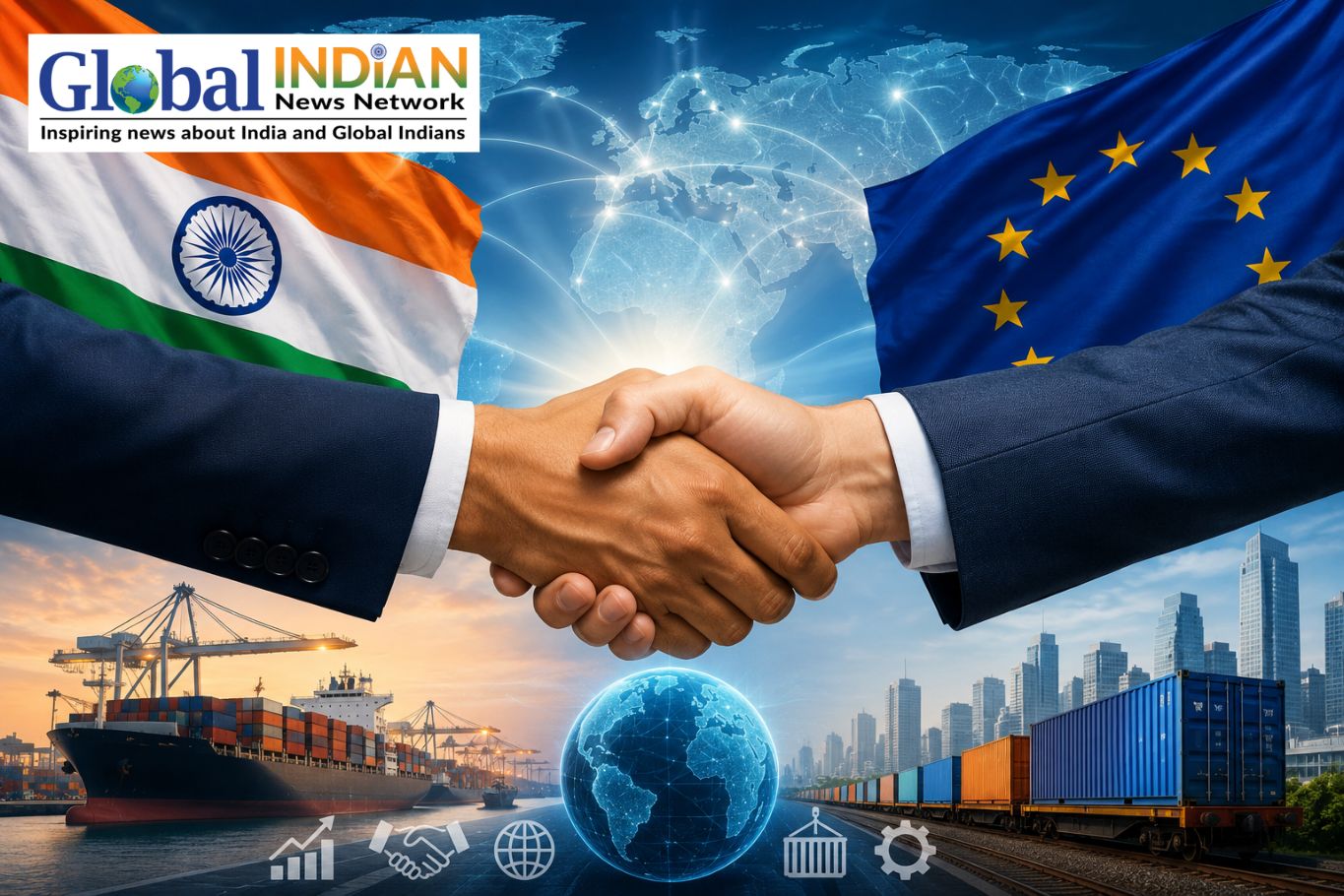
 India and the European Union are moving closer toward what could become one of the largest free trade agreements in the world, a pact expected to influence nearly 2 billion people and account for almost one-third of global trade activity. Officials and industry leaders believe the proposed agreement could redefine economic cooperation between the two regions while strengthening global supply chains and investment partnerships.
Speaking at a Federation of European Business in India event focused on the India-EU trade negotiations, Additional Secretary in the Department of Commerce Darpan Jain described the proposed agreement as the “mother of all deals” because of its enormous economic scale and international significance. According to estimates shared during the discussion, the agreement could eventually represent nearly one-fourth of the world’s gross domestic product while supporting trade flows valued at approximately $11 trillion.
The ongoing negotiations involve far more than traditional tariff reductions. Officials indicated that discussions also include digital trade frameworks, financial services, telecommunications, intellectual property protections, regulatory standards, and trade in both goods and services. The broad scope of the agreement reflects the changing nature of international commerce, where technology, digital systems, and service industries play an increasingly important role in economic growth.
Business leaders participating in the discussions noted that the proposed trade pact could create substantial opportunities across multiple industries. Sectors including automobiles, textiles, chemicals, leather manufacturing, and digital services are expected to benefit from improved market access and reduced trade barriers. Companies on both sides are also anticipating stronger supply chain integration and increased long-term investment opportunities if the agreement is finalized successfully.
The talks come at a time when India’s services sector has shown particularly strong momentum. Over the last decade, services exports have expanded at nearly twice the pace of goods exports, highlighting India’s growing importance in global technology and professional services markets. This year, India’s goods exports reached approximately $442 billion, while services exports climbed to around $421 billion, reflecting the country’s increasing economic diversification.
Industry representatives stated that the trade agreement could bring greater stability and predictability to commercial relations between India and the European Union. A clearer regulatory framework and easier market access are expected to encourage businesses to expand operations, increase investment, and deepen cross-border partnerships.
The India-EU FTA is also being viewed through a strategic lens as countries seek to strengthen trusted trade relationships amid shifting geopolitical and economic conditions worldwide. Analysts believe the agreement could position India as an even more influential player in global commerce while offering European businesses greater access to one of the world’s fastest-growing major economies.