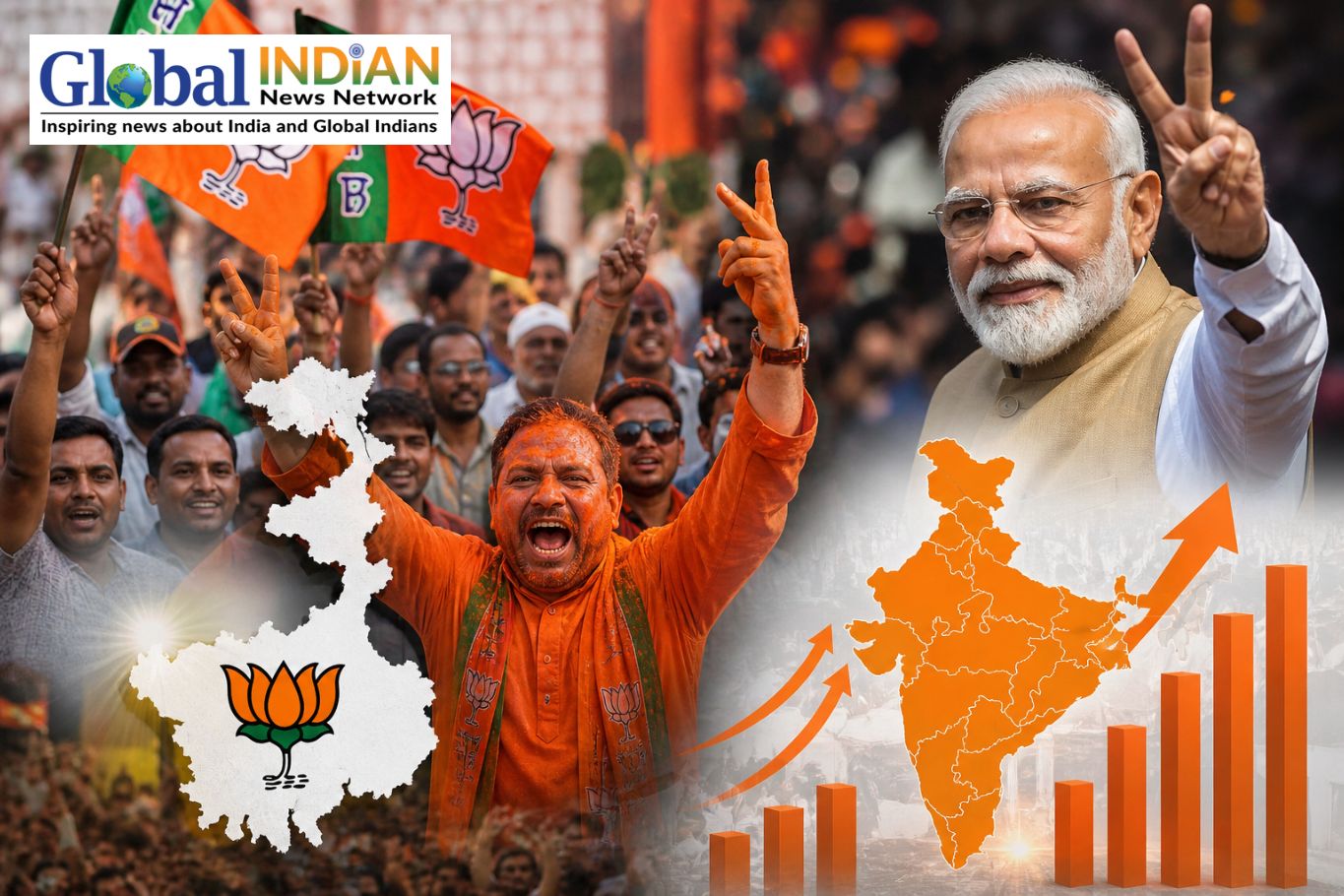
 In a landmark political development, the Bharatiya Janata Party (BJP) has achieved a decisive victory in the West Bengal Assembly Elections 2026, marking one of the most significant shifts in the state’s political landscape in decades. Early counting trends confirmed that the BJP has secured more than 170 seats, comfortably surpassing the majority mark and positioning itself to form the government for the first time in the state’s history.
The election outcome represents a dramatic setback for the Trinamool Congress (TMC), which has long dominated Bengal politics under the leadership of Mamata Banerjee. In a particularly striking turn of events, Banerjee lost her stronghold constituency of Bhabanipur to BJP leader Suvendu Adhikari by a margin of over 15,000 votes, signaling a deep erosion of support even in traditionally secure regions.
Political analysts describe the result as a major realignment of voter sentiment, driven by issues of governance, development promises, and shifting public expectations. The BJP’s campaign focused heavily on economic growth, employment opportunities, and administrative transparency, which appears to have resonated strongly with voters across urban and rural regions alike.
Prime Minister Narendra Modi hailed the verdict as a victory of progress and public aspiration, stating that the people of Bengal have chosen a path of development and stability. He emphasized that the new government would prioritize welfare schemes, including the rapid implementation of national health and social support programs.
On the other hand, Mamata Banerjee acknowledged the disappointing results but asserted that her party would regroup and return stronger in the future. She alleged irregularities during the electoral process, though no formal evidence has been presented to support these claims.
The election also reflected broader national trends, with allied states witnessing similar political shifts favoring the BJP and its partners. The results are expected to reshape not only West Bengal’s governance but also influence the wider political direction of eastern India in the coming years.