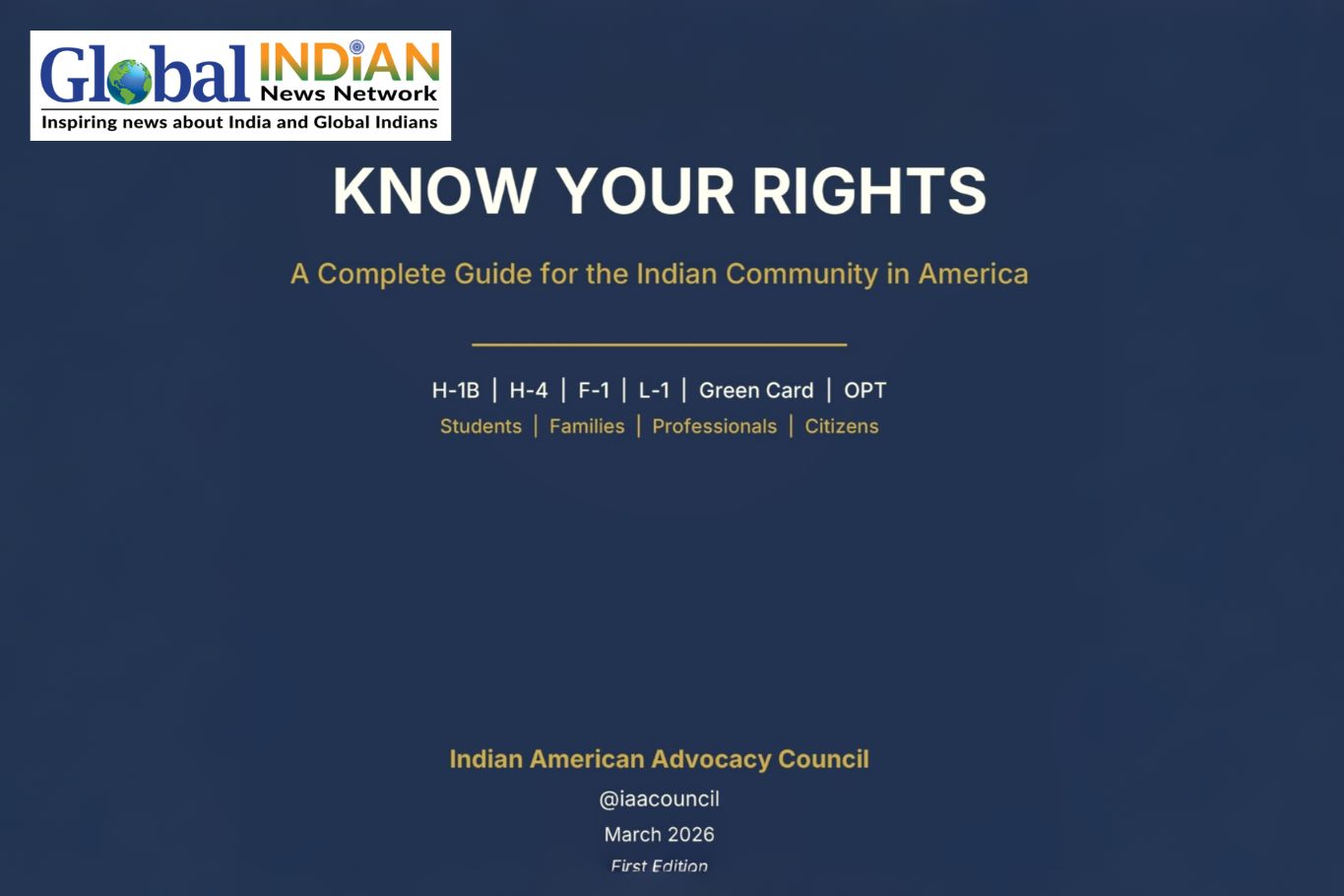
 The Indian American Advocacy Council has introduced a detailed “Know Your Rights” guide aimed at supporting Indians living in the United States amid growing concerns over discrimination and hostility. The 10-page document serves as a practical resource for individuals across different immigration categories, including H-1B workers, students, green card holders, and citizens.
The guide was released in response to increasing reports of online abuse, targeted harassment, and institutional challenges faced by the Indian-American community, particularly following political developments in recent years. It provides clear instructions on handling sensitive situations, such as interactions with immigration authorities, and outlines protections available in workplaces, especially for visa holders.
In addition to legal guidance, the document explains how individuals can document incidents of discrimination effectively. It advises recording details such as time, location, and evidence like photos or videos, which can strengthen complaints. The guide also lists important contact points for reporting incidents, including law enforcement and federal agencies, helping victims seek timely assistance.
The council highlighted data pointing to a significant rise in anti-Indian sentiment, including a sharp increase in online slurs and instances of discrimination reported by community members. It also noted cases of vandalism targeting religious places and the spread of negative content reaching hundreds of millions of views, indicating the scale of the issue.
A case study mentioned in the guide focuses on a city in Texas that has reportedly seen heightened tensions, with organized campaigns spreading misinformation and hostility toward the Indian community. Such examples underline the need for awareness and preparedness among residents.
The guide further emphasizes that Indian-Americans are protected under several federal laws that prohibit discrimination based on race, religion, or national origin. These legal safeguards provide a framework for addressing hate crimes, workplace bias, and housing discrimination.
Public reaction to the guide has been mixed. While many have welcomed it as a much-needed resource for community protection, others have criticized it, reflecting the polarized environment the document seeks to address.
Overall, the initiative aims to empower individuals with knowledge and tools to navigate challenges, ensuring safety and access to justice while reinforcing awareness about rights and protections in a system involving legal and economic stakes worth millions of dollars.