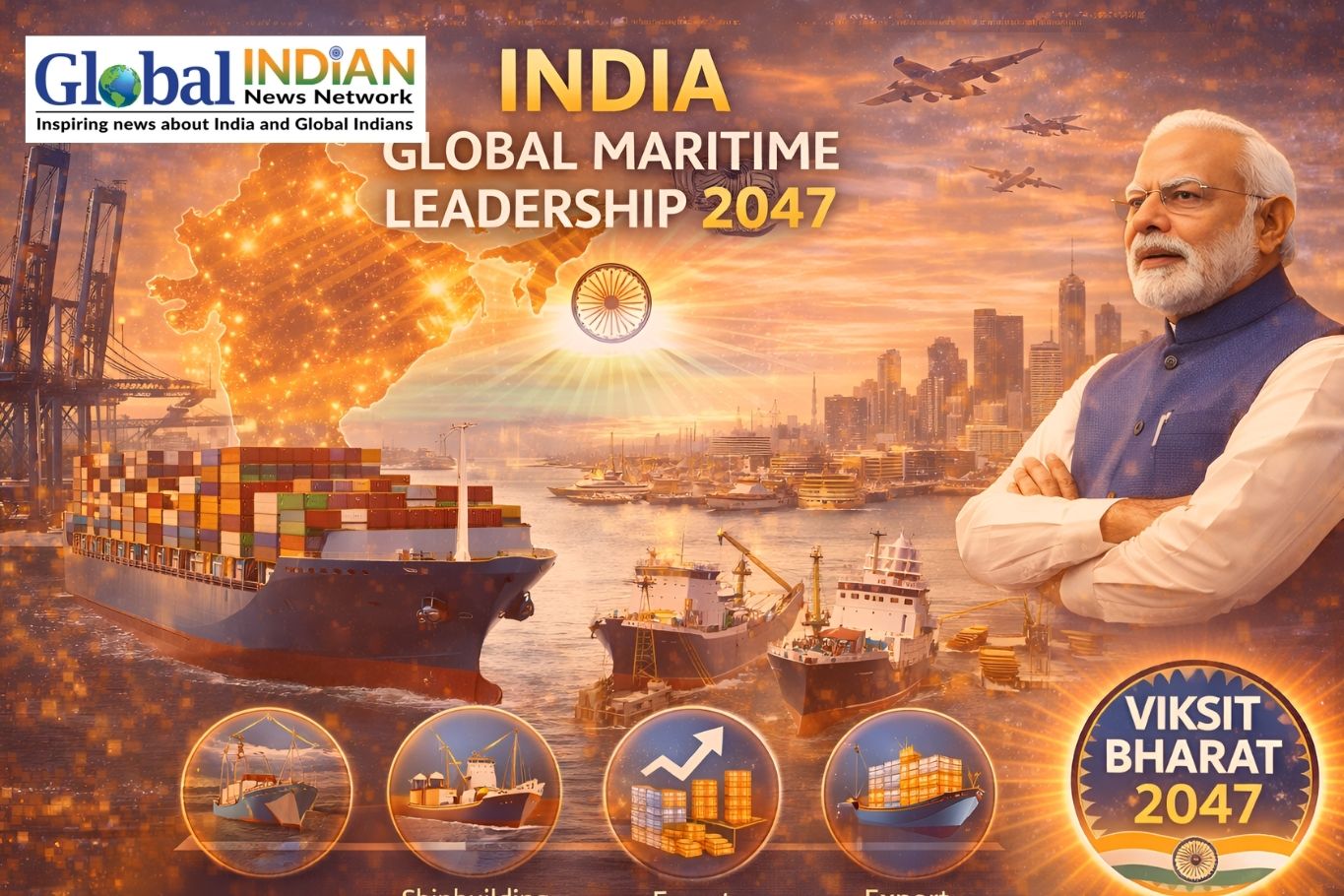
 India is advancing an ambitious agenda to establish itself as a global maritime leader by 2047. Speaking at the CII EXIM Conference 2026 in Kolkata, Minister of State for Ports, Shipping and Waterways, Shantanu Thakur, emphasized that nearly 95% of India’s trade by volume and 70% by value flows through Indian ports. This underscores the critical role of the port sector in enhancing trade competitiveness and driving economic growth.
Over the past decade, India has doubled port handling capacity while significantly improving operational efficiency. Modern mechanization and digitalization have cut turnaround times at major ports, allowing for faster cargo movement and reducing bottlenecks. The government is also focused on improving multimodal connectivity and logistics infrastructure to ensure that port facilities meet the demands of an export-driven economy.
In addition to port development, India is taking steps to strengthen its shipbuilding sector. Policy measures and budget allocations aim to expand domestic shipbuilding capacity, positioning India among the world’s top shipbuilding nations. This initiative is expected to generate employment, support industrial growth, and contribute to sustained economic development.
The maritime expansion aligns with India’s broader economic goals, including achieving a US$ 5 trillion economy and realizing the Viksit Bharat 2047 vision. By developing world-class port infrastructure, modernizing shipping capabilities, and enhancing export competitiveness, India aims to solidify its position in the global trade ecosystem.
Minister Thakur noted that these initiatives will make Indian ports more efficient, attract investment, and facilitate smoother trade flows. The government’s integrated approach combines infrastructure upgrades, technological adoption, and strategic policy support to ensure that India’s maritime and shipbuilding sectors serve as engines of growth and global influence in the decades ahead.
Through these efforts, India is not only reinforcing its domestic economic foundations but also setting the stage to emerge as a significant player in international shipping and maritime commerce by the mid-21st century.