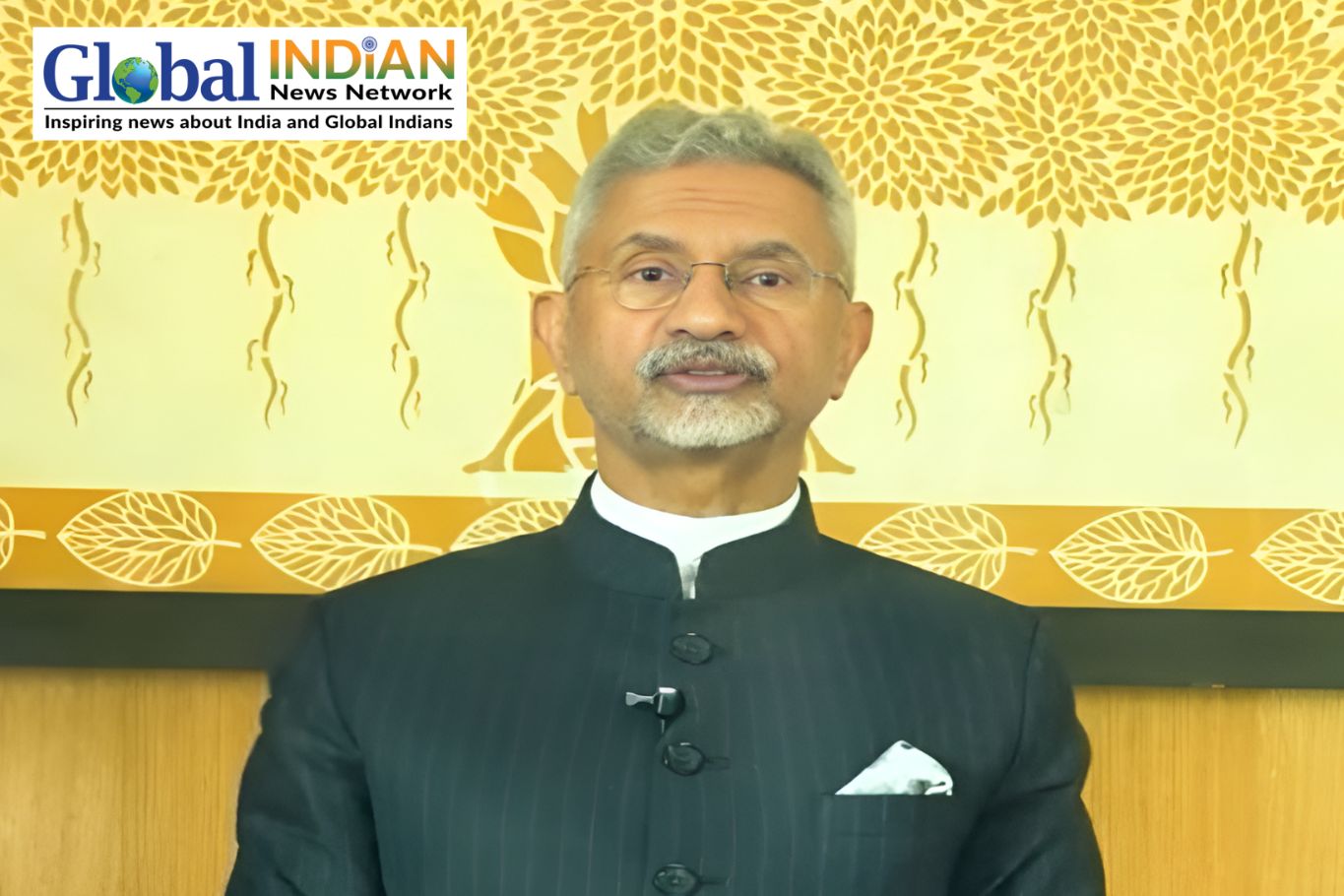
 External Affairs Minister S. Jaishankar has called for a comprehensive and human-centric approach to human rights, urging the global community to prioritise development, capacity-building and tangible improvements in the lives of vulnerable populations over politicisation and selective criticism.
Addressing the United Nations Human Rights Council through a video message, Jaishankar said India seeks to expand common ground in an international environment increasingly marked by conflict, polarisation and uncertainty. He emphasised dialogue over confrontation, consensus over division and development over narrow political interests.
Stressing the need for moral clarity, Jaishankar underlined that terrorism represents one of the gravest violations of human rights and must be confronted without ambiguity. He said there can be no justification for acts of terror, particularly when innocent lives are targeted, and called for zero tolerance towards such crimes.
India, elected to the Human Rights Council for a seventh term with an overwhelming mandate, views its role as that of a bridge-builder, especially for the Global South. Jaishankar noted that the strong support received reflects trust in India’s balanced and inclusive approach to global human rights discourse.
Reaffirming India’s democratic credentials, he said the country remains committed to working with all members and observers to promote and protect human rights for all people, based on equality, openness and mutual respect. He cautioned against approaches driven by double standards or selective outrage, which risk undermining the credibility of international institutions.
Highlighting India’s development-oriented vision of rights, Jaishankar said the marginalisation of any group or insecurity in any region ultimately weakens global human well-being. Drawing from India’s own experience as a developing democracy, he stressed that social justice, pluralism and resilience must be central to the human rights framework.
On the intersection of technology and rights, Jaishankar asserted that technology should act as a force multiplier for human rights rather than deepen global divides. He pointed to India’s Digital Public Infrastructure as an example of how large-scale investment in human capacity can enable access to welfare, financial inclusion and public services with transparency and efficiency.
He also noted that India is sharing its technological expertise as a global public good, reinforcing cooperation and inclusive growth. Emphasising the link between development and dignity, Jaishankar said crises such as pandemics, climate change and economic stress have intensified inequalities, making development indispensable to the realisation of human rights.
India’s message at the Council underscored a broader call for partnership-driven solutions that place people, progress and peace at the heart of the global human rights agenda.