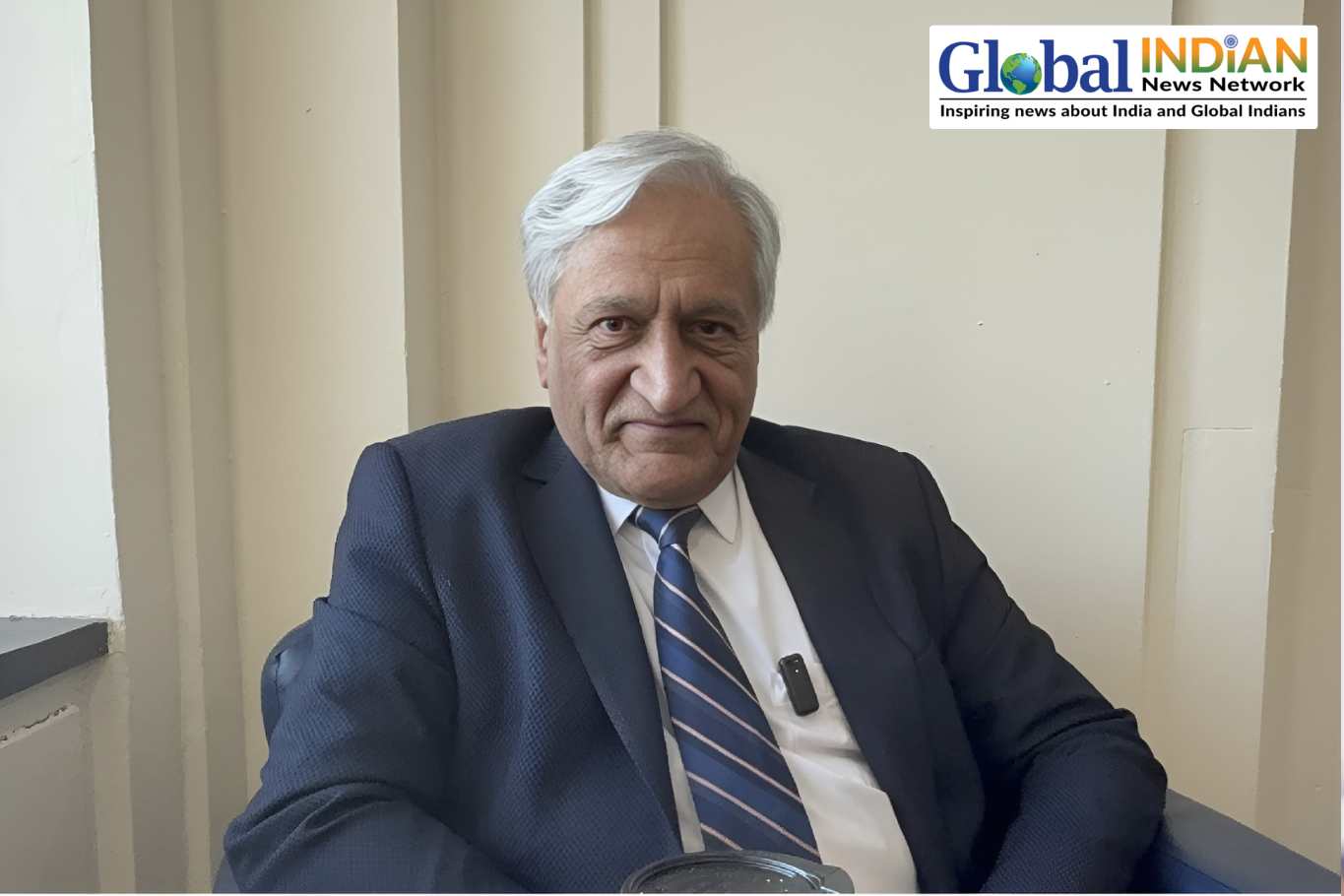
 Indian-American medical professional Dr Anil Kumar has formally entered the race for the US House of Representatives as an independent candidate from Michigan’s 11th Congressional District, arguing that systemic shortcomings in healthcare, gaps in education, and limited political influence for Indian Americans require urgent attention. His decision follows the departure of Democratic Representative Haley Stevens, who is now contesting for the US Senate, leaving the seat open for new contenders.
Speaking in a detailed interview, Kumar emphasized that open congressional seats present a rare window for political newcomers to bring fresh perspectives. He noted that the district is home to around 750,000 residents, with approximately 200,000 people participating in elections during a typical voting cycle. According to him, this demographic mix creates both challenges and opportunities for an independent campaign.
Kumar, who has been practicing as a urologist for several decades, said his motivation to enter politics began more than ten years ago after witnessing persistent weaknesses in the American healthcare system. Despite annual national spending reaching nearly $4,300,000 million, he argued that patient outcomes remain below global standards. He recalled instances where patients struggled to afford medication, reinforcing his belief that policy reforms are necessary.
Beyond healthcare, he identified education as another critical factor behind his political ambitions. Kumar currently serves as an elected member of the Board of Governors at Wayne State University, a position he secured with the support of around 1,200,000 voters across the state. He expressed concern that a significant portion of students in both rural and urban areas still lack basic proficiency in English and mathematics, highlighting the need for stronger educational policies.
Having previously contested congressional elections three times as a Democrat, Kumar explained that his shift to independent status reflects growing frustration with party-driven decision-making. He argued that major political parties often seek support from minority communities but rarely elevate them to leadership positions. He believes that being free from party constraints will allow him to advocate more effectively for meaningful reforms.
Addressing skepticism about his chances as an independent candidate, Kumar pointed to changing voter trends. He said that around 45% of Americans now identify as independents, suggesting a growing appetite for alternatives to traditional party politics. He also claimed that he has backing from Republican voters in a predominantly Democratic district, as well as support from Democrats dissatisfied with their party’s direction.
Reflecting on his personal journey, Kumar spoke about his move from Jaipur and Mumbai to Michigan, where Wayne State University sponsored his green card in 1984. He expressed pride in his Indian heritage and Hindu identity while also praising the United States as a land of opportunity.
Kumar urged Indian Americans to become more politically engaged, particularly at the local level, and to contribute financially to campaigns. He compared community donations, stating that Jewish Americans contribute around $19 per person, Muslim Americans about $9, while Indian Americans contribute roughly $1 on average.
Although Michigan’s 11th District has leaned Democratic in recent years due to redistricting, Kumar believes that rising political awareness among Indian Americans could reshape the landscape. He warned that economic success alone is not enough and stressed that unity and active participation are essential for sustained influence in American politics.