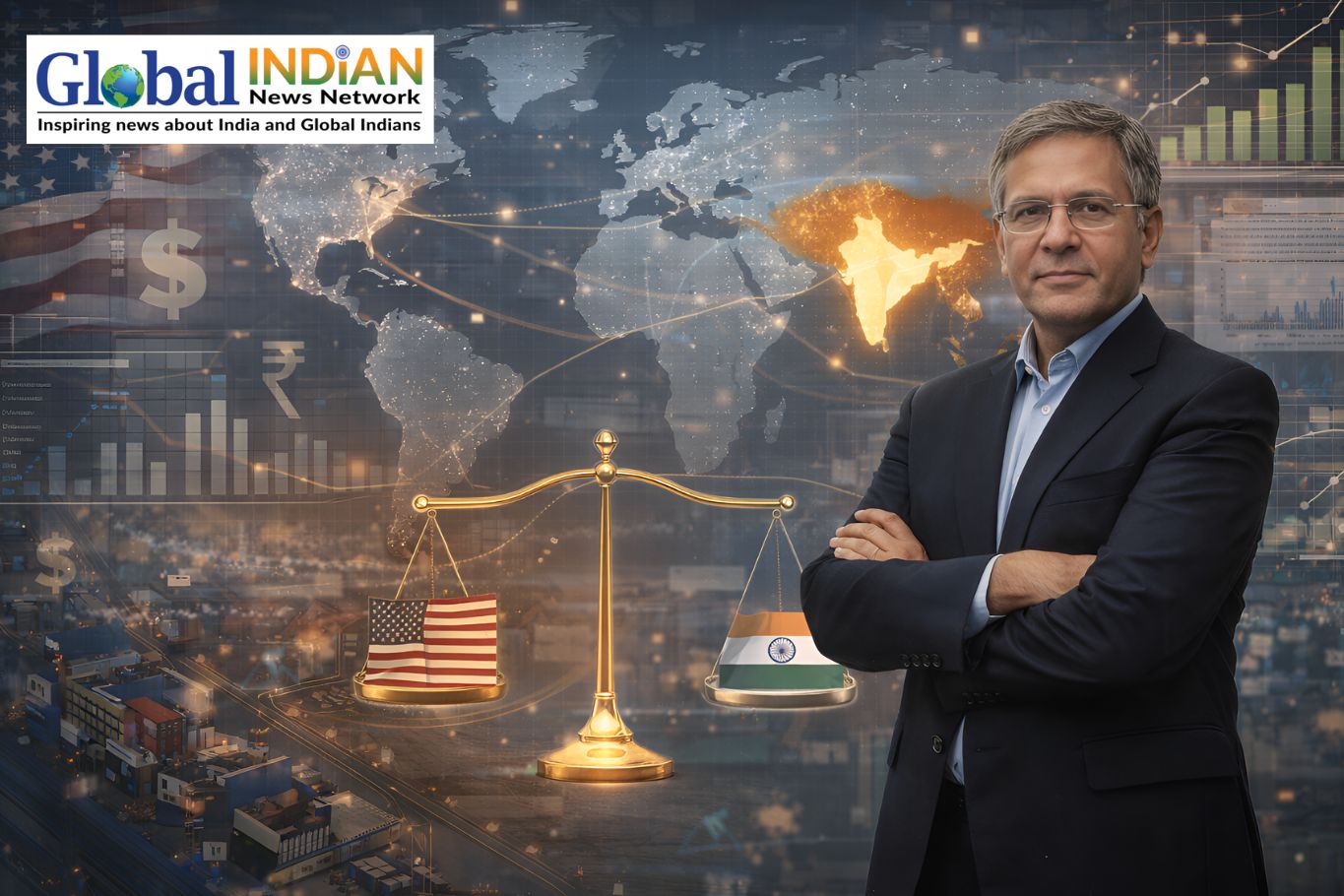
 Political risk expert Ian Bremmer has highlighted that India’s economic strength gives it rare strategic freedom in international affairs, particularly in dealings with the United States. Speaking to NDTV, Bremmer placed India on what he calls the “TACO” spectrum—Trump Always Chickens Out— a category for nations capable of pushing back against Washington without facing severe consequences. In contrast, countries on the “FAFO” (Fool Around And Find Out) side, such as Venezuela and Ukraine, are vulnerable when challenging more powerful states. Bremmer grouped India alongside China and Russia as countries operating on their own strategic terms.
Bremmer noted that India’s robust growth—expected at 7–8% in 2026—and the absence of urgent dependence on a US trade deal provide New Delhi the confidence to resist external pressure. He emphasized that Prime Minister Narendra Modi’s long tenure and India’s economic trajectory allow the country to assert independence, unlike highly trade-dependent nations such as Canada or parts of Europe. “It is not urgent for Modi to respond to Trump in the way he wants,” Bremmer said.
India’s macroeconomic fundamentals reinforce this TACO positioning. The International Monetary Fund recently raised India’s GDP forecast for FY26 to 7.3%, citing strong domestic demand, easing inflation, and robust private investment. Growth is expected to moderate slightly in subsequent years but long-term fundamentals remain solid. Financial institutions like Goldman Sachs have also upgraded India’s growth projections to about 6.9%, reflecting confidence in policy reforms and a broadening trade strategy that reduces reliance on any single market.
Despite ongoing US tariff disputes and pressures over energy and market access, India’s diversified trade portfolio and resilient domestic economy cushion external shocks. Analysts say this economic strength allows India to negotiate from a position of confidence while pursuing strategic objectives independently. Bremmer’s TACO framework underscores India’s growing ability to chart its own course on the global stage, leveraging economic momentum, investment flows, and policy autonomy to strengthen its international influence.