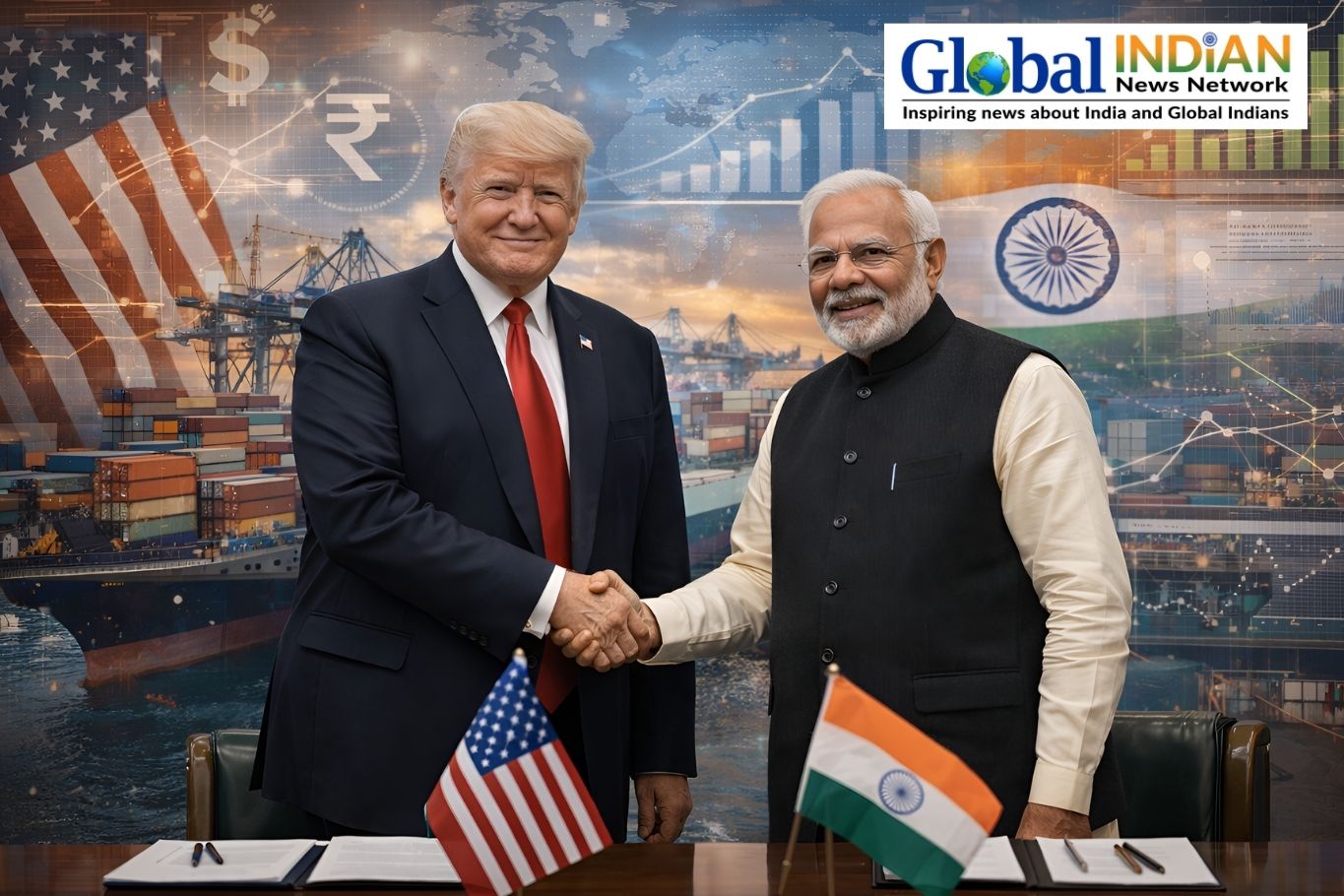
 A recently proposed trade arrangement between the United States and India is expected to gradually narrow India’s current account shortfall, lend stability to its currency, and reduce its exposure to global economic shocks, according to a report released on Tuesday. Under the agreement, Washington has agreed to lower reciprocal tariffs on Indian products to 18 per cent from the previous 50 per cent, a move analysts describe as structurally beneficial for India’s economic trajectory. Axis Securities highlighted that the pact is likely to strengthen India’s medium-term growth prospects and external financial position, particularly by supporting industries that are heavily reliant on exports to the US market.
The report emphasised that clearer market access and predictable tariff structures could encourage greater foreign direct investment running into billions of dollars, stimulate manufacturing expansion, and improve overall trade inflows. Export-driven industries such as textiles, chemicals, pharmaceuticals, automotive components, information technology services, and select industrial segments are expected to see meaningful gains from reduced trade barriers and improved supply-chain reliability. Over time, stronger order flows, better utilisation of production capacity, and clearer earnings visibility could translate into sustained growth and higher market valuations for these sectors.
Analysts also noted that India–US economic ties are entering a more cooperative phase after years of tariff disputes and regulatory friction. Both nations are now looking to diversify supply chains, reduce reliance on China, and deepen strategic engagement, positioning the deal as a major economic catalyst.
Investor sentiment reflected this optimism, with India’s equity markets witnessing a sharp rally that added tens of billions of dollars in market value in a single trading session. Broader financial markets, including bonds and currency, also benefited from the renewed confidence in India’s trade outlook.
For India, the agreement aligns closely with its push to expand domestic manufacturing through production-linked incentive programmes and its strategy to diversify exports. For the United States, India presents a vast consumer base and a strategic manufacturing alternative in key industries.
The report concluded that while the deal is not merely a short-term boost, its successful implementation could significantly strengthen India’s export competitiveness, deepen its industrial base, and enhance its integration into global trade networks. Investors are advised to focus on firms with strong US exposure, scalable manufacturing operations, robust regulatory compliance, and solid financial foundations to fully benefit from the opportunity.