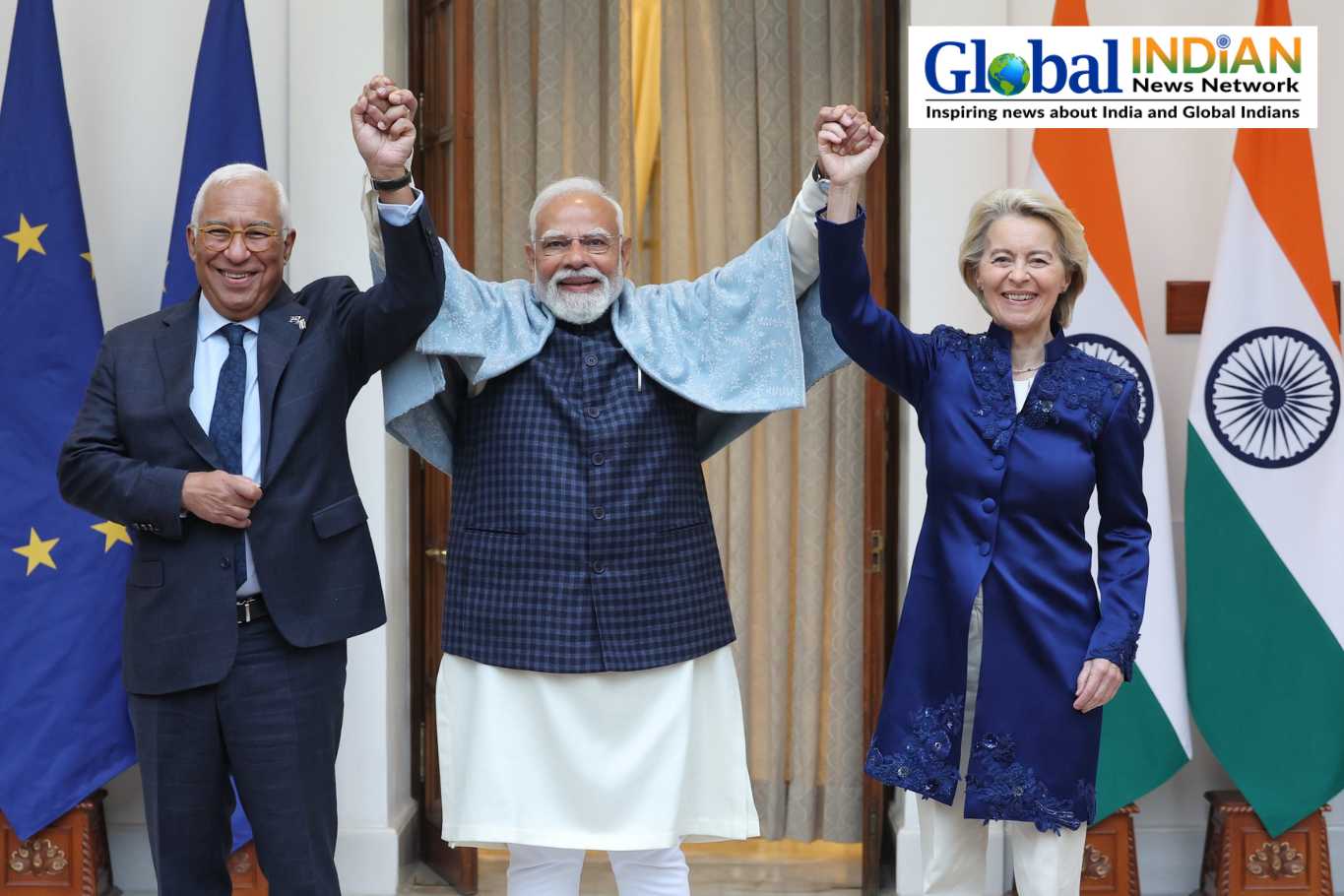
 India and the European Union have finalized the long-awaited India-EU Free Trade Agreement (FTA), marking a significant milestone in bilateral relations between two of the world’s largest economies. The announcement was made during the 16th India-EU Summit by Prime Minister Narendra Modi and European Commission President Ursula von der Leyen, highlighting the strategic and economic partnership between the nations.
The FTA positions India, the world’s fourth-largest economy, and the EU, the second-largest economy, as trusted global trade partners, collectively accounting for 25% of global GDP and nearly one-third of worldwide trade. A cornerstone of the agreement is the preferential market access granted to Indian exporters, with over 99% of Indian exports by value eligible for preferential entry into EU markets. This is expected to significantly boost India’s export competitiveness, particularly in labour-intensive sectors such as textiles, apparel, leather, footwear, marine products, gems and jewellery, handicrafts, engineering goods, and automobiles.
Official estimates suggest exports worth US$ 75.85 billion are set to see accelerated growth, including nearly US$ 33 billion from labour-intensive sectors where tariffs of up to 10% will be eliminated. The FTA is also projected to create employment opportunities for women, artisans, youth, MSMEs, and professionals. The agreement includes a quota-based approach to automobile liberalization, allowing EU manufacturers to introduce high-end models in India while providing reciprocal access for Indian-made vehicles in EU markets. Sensitive sectors, particularly agriculture and dairy, remain protected, while favorable access has been secured for exports of tea, coffee, spices, fresh fruits, vegetables, and processed foods.
Services, a fast-growing part of both economies, receive extensive coverage. India has secured meaningful access across 144 EU service subsectors, including IT, professional services, education, financial services, tourism, construction, and business services, while the EU gains access to 102 service subsectors in India. The FTA also introduces a mobility framework for skilled and semi-skilled professionals, intra-corporate transferees, and students, alongside provisions for social security agreements and post-study work opportunities.
Beyond tariffs, the FTA addresses non-tariff barriers, regulatory cooperation, streamlined customs, and sanitary standards. It incorporates EU Carbon Border Adjustment Mechanism provisions, supports low-carbon transition, and reinforces intellectual property protections, recognizing India’s Traditional Knowledge Digital Library and commitments under the TRIPS framework. Emerging sectors like AI, clean technology, and semiconductors are included for cooperation.
Union Commerce Minister Piyush Goyal described the agreement as a landmark, stating it strengthens Make in India, integrates businesses into global value chains, and enhances professional mobility. With bilateral trade in goods at US$ 136.54 billion and services at US$ 83.1 billion in 2024-25, the FTA is expected to create unprecedented trade and investment opportunities, making India a trusted partner in the global economy.