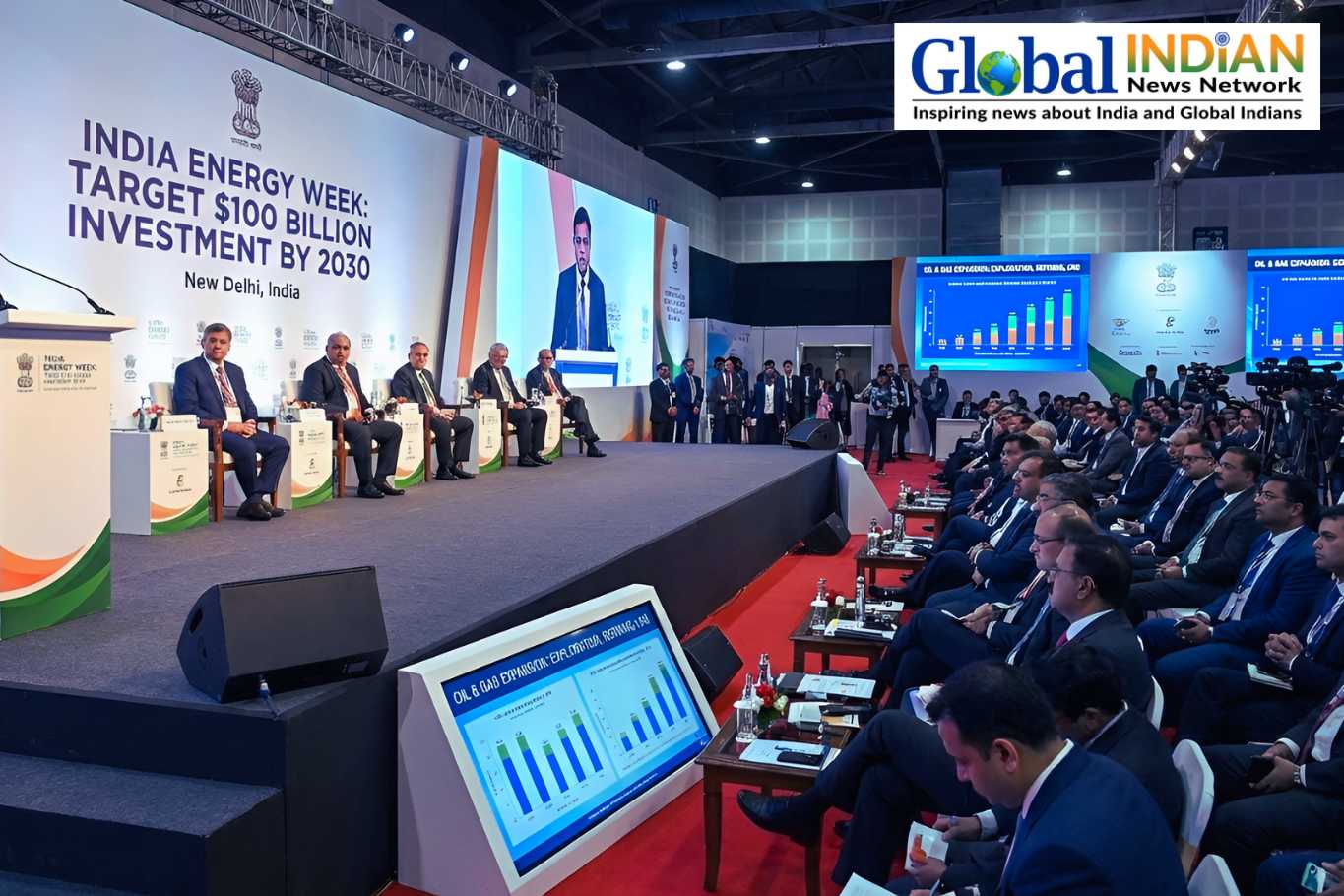
 India has set an ambitious target to attract US$ 100 billion in investments for its oil and gas sector by 2030, announced Prime Minister Narendra Modi at the India Energy Week 2026 summit. The initiative underscores the government’s plan to accelerate energy infrastructure development while reducing dependence on imported energy. As one of the world’s fastest-growing major economies, India aims to enhance domestic exploration, covering nearly 1 million square kilometers and allocating over 170 hydrocarbon blocks to energy companies. The Andaman and Nicobar basin has been highlighted as a promising new hydrocarbon region, with ongoing reforms in exploration and production policies opening previously restricted areas.
The investment target of US$ 100 billion forms part of a broader US$ 500 billion opportunity in India’s energy sector, which the government is actively promoting to global investors. The strategy encompasses multiple initiatives, including raising refining capacity from 260 million metric tonnes per annum (MMTPA) to 300 MMTPA, constructing new liquefied natural gas (LNG) import terminals, expanding the city gas network, and developing domestic shipbuilding capabilities to transport LNG. A key component of this push is a Rs. 70,000 crore (US$ 7.78 billion) program for LNG transportation infrastructure.
Prime Minister Modi emphasized that these efforts are designed not only to meet India’s growing energy needs but also to position the country as a competitive global hub for refining and energy production by 2030. The investment plan aims to attract international participation, boost domestic industrial capacity, and create long-term opportunities for technological development in the oil and gas sector. By expanding both upstream exploration and downstream infrastructure, India is seeking to ensure energy security, foster economic growth, and enhance its strategic standing in the global energy market.
This comprehensive investment push marks a decisive step toward making India self-reliant in energy while opening the sector to international collaboration, ensuring that the nation’s energy ambitions align with its broader economic growth objectives.