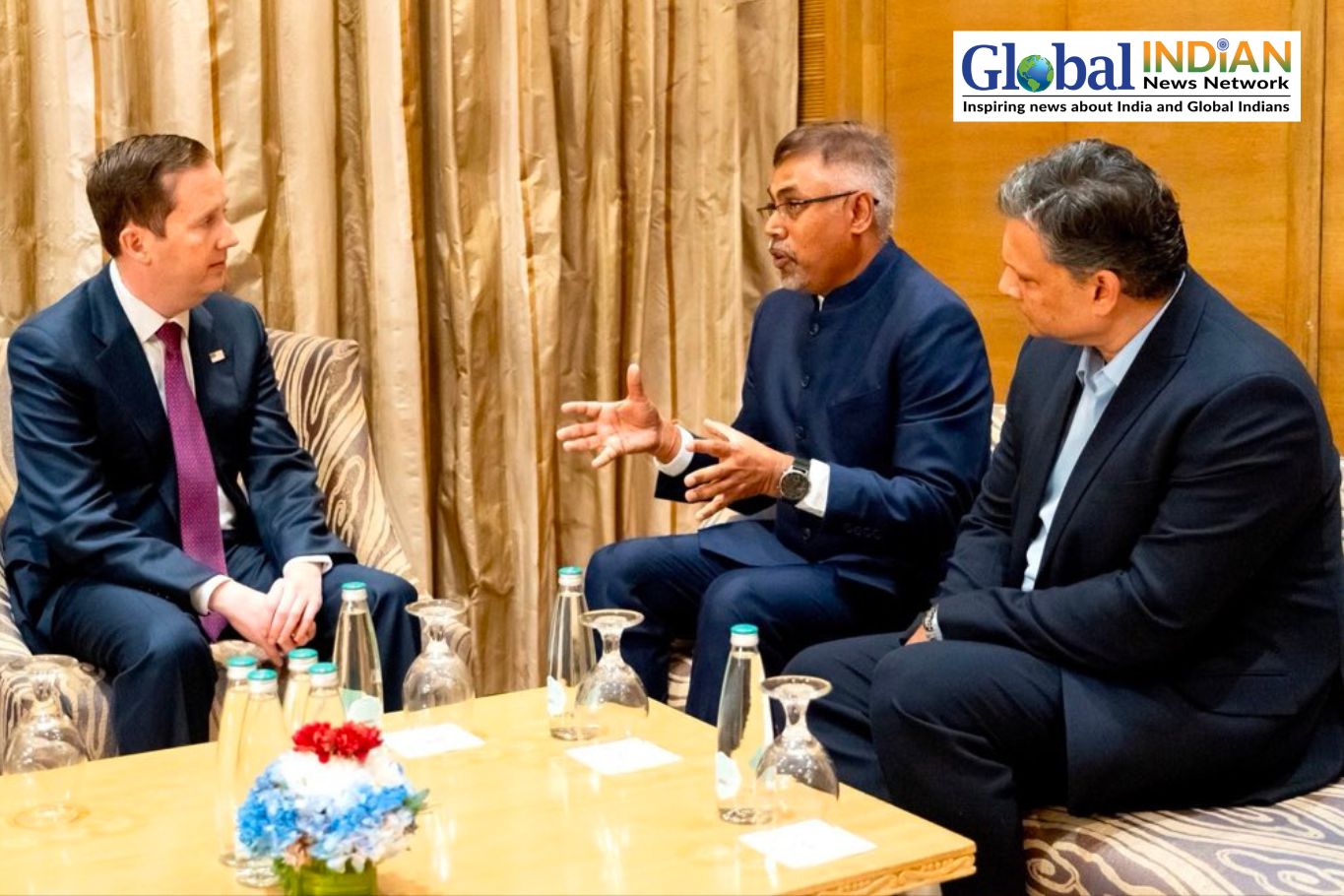
 US Ambassador to India, Sergio Gor, concluded a successful visit to Mumbai on Sunday, underscoring the growing strategic and economic partnership between India and the United States. During his trip, Ambassador Gor met with top government officials, industry leaders, and religious figures, highlighting cooperation across trade, technology, energy, education, and resilient supply chains.
On Saturday, Gor visited the iconic Gateway of India, praising Mumbai’s vibrancy and urging people to experience the city’s unique blend of bustling streets, historic landmarks, and the Arabian Sea. Sharing a photo on X, he described Mumbai as a “vibrant tapestry” and encouraged everyone to visit to witness its charm firsthand.
The ambassador held high-level discussions with Maharashtra Chief Minister Devendra Fadnavis, where they explored strategic initiatives aimed at deepening trade, entertainment, technology, and manufacturing partnerships. CM Fadnavis briefed Gor on flagship projects such as the Navi Mumbai International Education City, with both sides agreeing to intensify collaboration to strengthen the US-Maharashtra partnership.
Gor also met Reserve Bank of India Governor Sanjay Malhotra to discuss expanding cooperation, particularly in technology adoption and infrastructure. The ambassador highlighted discussions on advanced US technological solutions that could support India’s growth across sectors.
Further reinforcing ties with the business community, Gor engaged with N. Chandrasekaran, Chairperson of Tata Companies, and Mukesh Ambani, Chairman of Reliance Industries. These meetings focused on exploring new avenues for investment, technology collaboration, and cross-border partnerships, leveraging the significant presence of Indian conglomerates in the US market.
The ambassador emphasized that these engagements reflect strong momentum in US-India relations, building a foundation for future collaboration across multiple sectors. His Mumbai visit underscores the growing partnership between the two nations, highlighting shared priorities in trade, technology, energy, and education while promoting resilient supply chains and innovative economic initiatives.