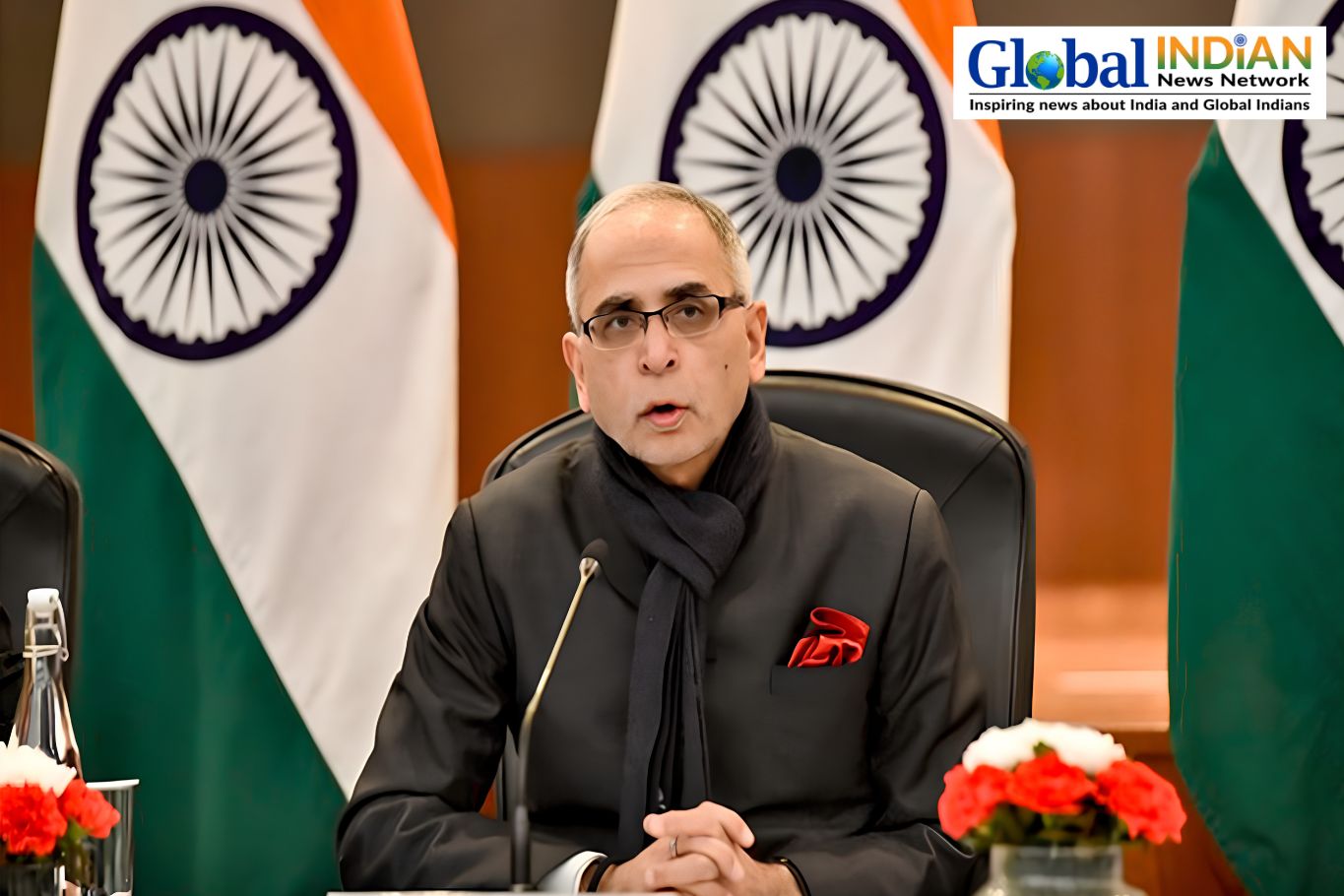
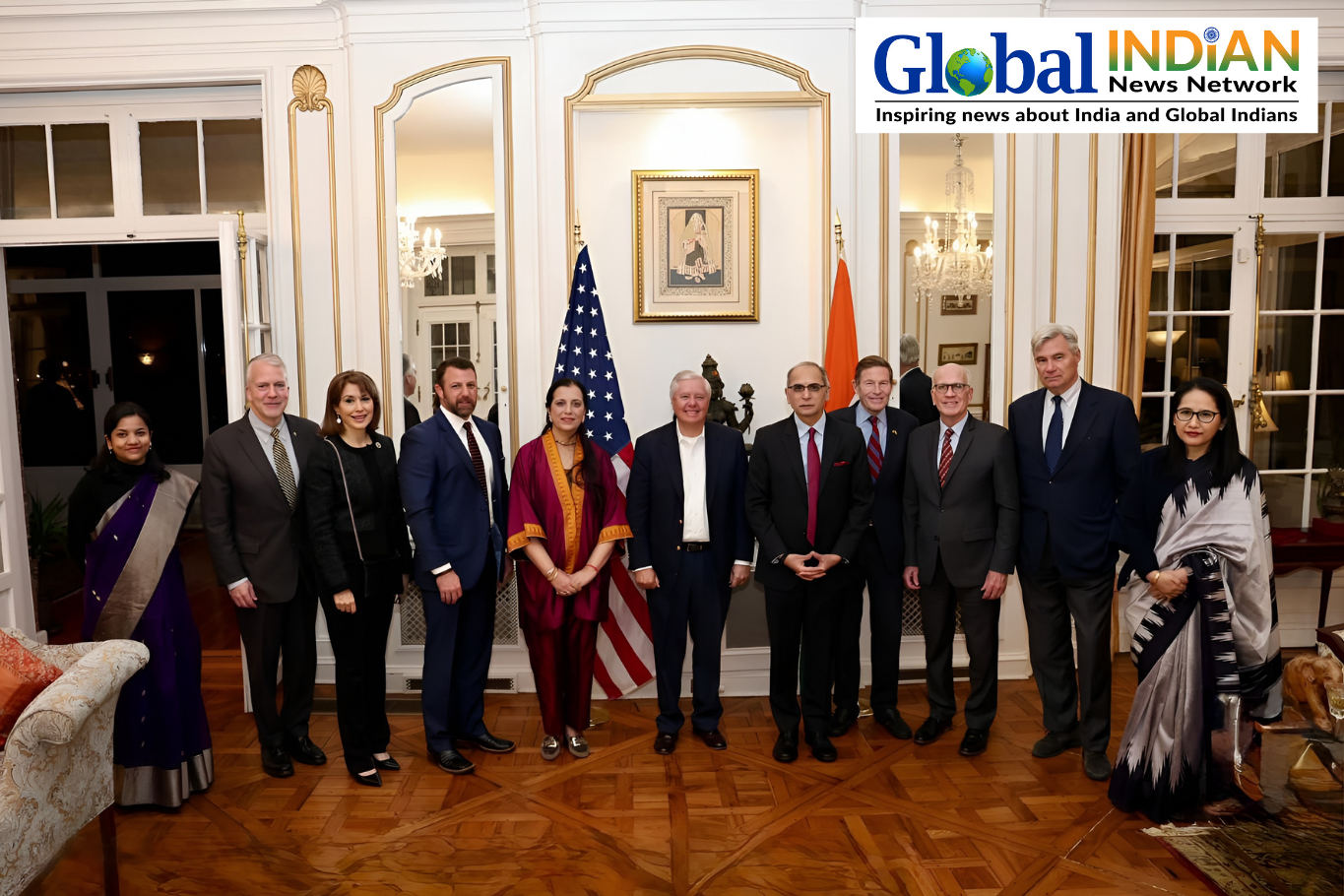
 US Senator Lindsey Graham recently claimed that India’s Ambassador to the United States, Vinay Kwatra, requested him to convey to former President Donald Trump the need to “relieve the tariff” imposed on India for its Russian oil purchases. According to Graham, this discussion took place during a meeting at India House, the ambassador’s official residence in Washington, last month.
Graham, speaking alongside Trump aboard Air Force One, said the ambassador focused on India’s reduction in Russian oil imports. The Republican senator, who supports legislation proposing tariffs of up to 500 per cent on countries continuing Russian oil purchases, noted that Kwatra asked, “Would you tell the President to relieve the tariff?” Graham added that such measures are effective but warned that buying discounted Russian oil indirectly supports Russia’s military efforts.
There were no immediate responses from Ambassador Kwatra or other Indian officials regarding Graham’s statements. During the meeting at India House, several US senators, including Richard Blumenthal, Sheldon Whitehouse, Peter Welch, Dan Sullivan, and Markwayne Mullin, were also present.
Graham emphasized that imposing tariffs was intended to give Trump leverage, adding that these measures likely influenced India to cut its Russian oil purchases. He further stated that ending the Russia-Ukraine conflict requires pressure on nations supporting Moscow financially.
Donald Trump, commenting on India’s oil strategy, claimed that Prime Minister Narendra Modi understood he was displeased with India’s Russian crude imports. Trump noted that India aimed to align with US expectations, warning that tariffs could be raised quickly, which would negatively impact India.
Currently, Trump has imposed a 50 per cent tariff on India, including 25 per cent specifically for Russian oil purchases, marking some of the highest rates globally. India relies on foreign sources for approximately 88 per cent of its crude oil needs, converting it into fuels like petrol and diesel. After Western countries distanced themselves from Russian crude, India became a major buyer of discounted Russian oil to maintain affordable energy for its consumers.
India has defended its trade stance, stating imports are necessary to ensure stable domestic energy costs and arguing that criticism is inconsistent given that other nations continue trade with Russia without such compulsion. The country stressed that protecting national interests and economic security is a priority amid global market pressures.