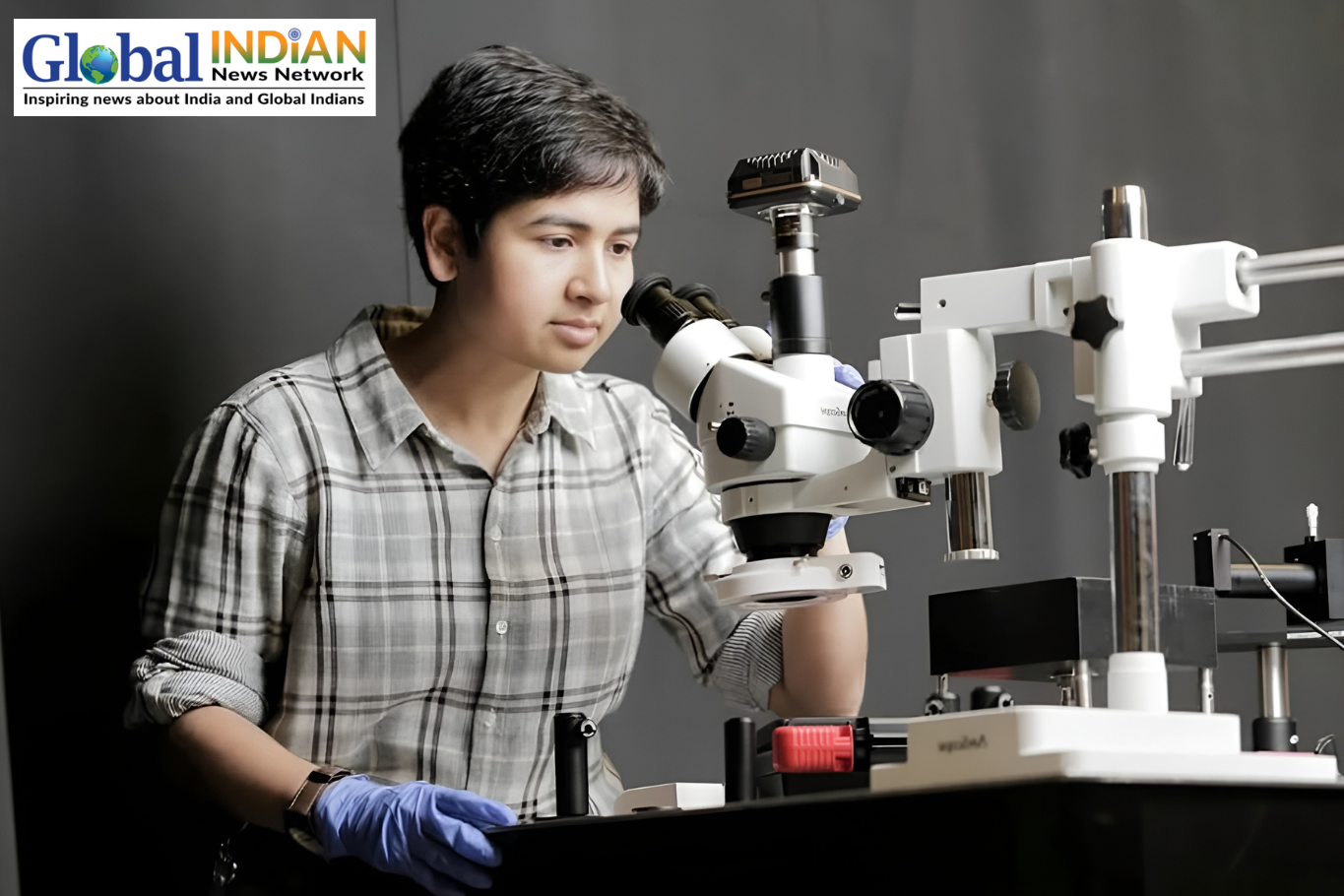
 Indian-origin professionals in the United States are shaping the future far beyond corporate boardrooms, extending their influence into life-saving scientific innovation. Among this growing group of changemakers is Deblina Sarkar, an Indian-born scientist at the Massachusetts Institute of Technology, whose groundbreaking research is redefining how complex brain diseases could be treated without the need for invasive surgery.
Born and raised in Kolkata, West Bengal, Deblina Sarkar is an electrical engineer, inventor, and researcher who currently serves as an assistant professor at MIT. An alumnus of IIT Dhanbad, she pursued advanced studies in nanoelectronics at the University of California, where she completed both her master’s degree and PhD. Her most notable contribution to medical science is Circulatronics, a revolutionary technology designed to diagnose and treat neurological disorders without making a single surgical incision.
Circulatronics represents a significant shift from traditional brain treatments that rely on implanted electrodes or invasive procedures. The technology uses microscopic, wireless electronic devices known as SWEDSs, which are fused with living cells and introduced into the bloodstream through injection. These chips are so small that they measure only a fraction of a grain of rice. Once inside the body, they travel through blood vessels, locate damaged areas of the brain, and settle there naturally, without surgery.
Powered externally by an infrared laser, these tiny electronic systems deliver precise electrical stimulation directly to impaired neurons deep within the brain. This approach has the potential to transform treatment options for conditions such as Alzheimer’s disease, chronic neurological pain, and brain tumors, offering safer and more accessible care for patients worldwide.
Deblina Sarkar’s journey to this breakthrough was marked by persistence and resilience. Inspired by a philosophy taught by her father — to live with discipline, work relentlessly, and maintain childlike curiosity — she continued her research despite facing more than 35 grant rejections in her early career. Skepticism from reviewers did not deter her belief in surgery-free brain implants, and her perseverance ultimately led to proof of concept and global recognition.
Her achievements have been honored with numerous prestigious awards, including the NIH Director’s New Innovator Award, the IEEE Nanotechnology Early Career Award, and recognition from the US National Academy of Engineering. She has also been named among top young innovators by leading science publications and invited to present her work at the renowned Lindau Nobel Laureate Meeting.
Deblina Sarkar’s work stands as a powerful example of how Indian-origin scientists in the United States continue to drive innovation that benefits humanity, reinforcing the global impact of the Indian diaspora in healthcare and scientific research.