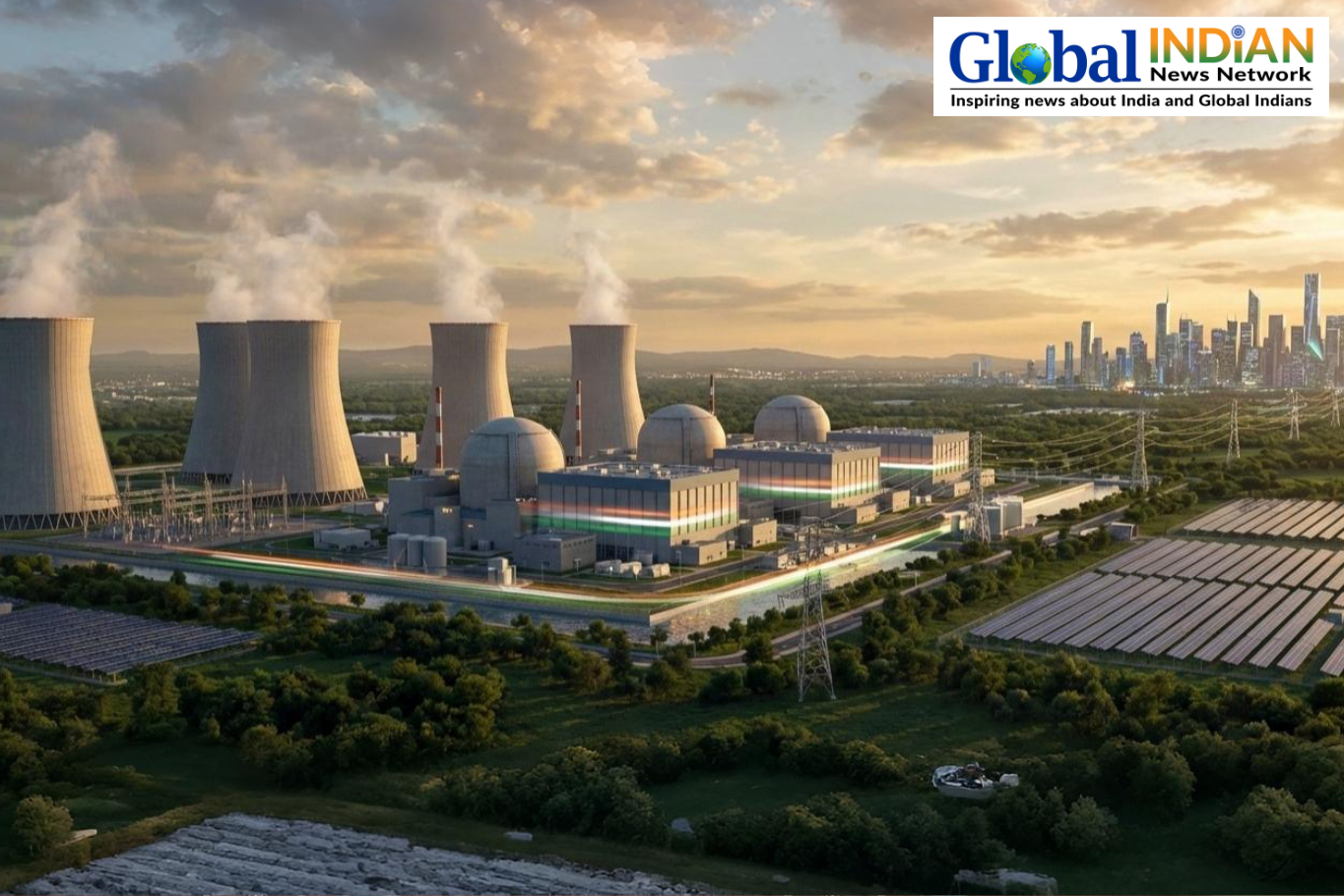
 India has formally launched an ambitious Nuclear Energy Mission, aiming to achieve approximately 100 GW of nuclear power capacity by 2047, combining domestic innovation with international collaboration under the Make in India initiative. Prime Minister Narendra Modi outlined the roadmap, emphasizing the use of both existing and advanced technologies to meet the country’s growing energy demands while supporting a clean energy transition.
According to the plan, the Nuclear Power Corporation of India Limited (NPCIL) is expected to contribute 54 GW of capacity through a series of new nuclear power plants utilizing Pressurised Heavy Water Reactors (PHWRs) and Light Water Reactors (LWRs). These projects will integrate indigenous technology with international expertise to ensure efficient, scalable, and sustainable energy production.
In addition, the Bhabha Atomic Research Centre (BARC) is spearheading the development of Small Modular Reactors (SMRs), including the 200 MWe Bharat SMR-200 and 55 MWe SMR-55, designed for decentralized and flexible deployment. These reactors are intended to supply captive power to energy-intensive industries such as steel and aluminum, particularly as older fossil fuel plants are phased out, while also extending clean energy access to remote and off-grid areas.
India is also advancing high-temperature gas-cooled reactors with capacities of up to 5 MW, enabling further diversification in nuclear technology applications. Following the FY25 budget announcement, NPCIL has invited proposals for 220 MW PHWR-based Bharat Small Reactors, supporting private sector participation in India’s nuclear expansion.
With established capabilities in 700 MWe PHWRs and emerging SMRs such as BSMR-200 and SMR-55, coupled with research and development from the Department of Atomic Energy (DAE), India is well-positioned to scale nuclear power while maintaining non-carbon emissions. This mission aligns with the country’s broader net-zero objectives by 2070, underscoring nuclear energy’s increasing role in the nation’s sustainable and clean energy strategy.