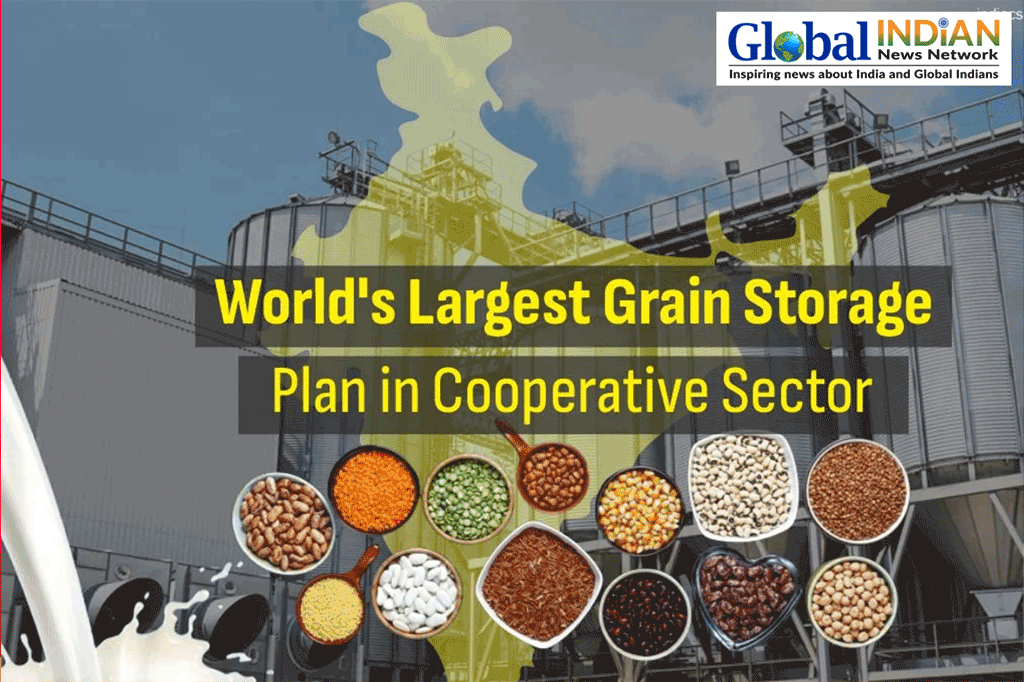
India has taken a major leap toward transforming its agricultural landscape by launching the world’s biggest grain storage initiative under a cooperative framework. The Central Government announced that this nationwide effort is designed to expand storage capacity, modernize rural infrastructure, and offer farmers greater flexibility in managing their harvests.
During a recent Rajya Sabha session, Minister of State for Cooperation Murlidhar Mohol shared key details about the project’s early progress. As part of the pilot phase, 11 godowns have already been built across 11 states, marking the first step in a large-scale expansion plan. In addition, more than 500 Primary Agricultural Credit Societies (PACS) have been shortlisted for the next stage of development. Once fully implemented, this initiative will stand as the first cooperative-led program of such magnitude aimed at creating a decentralized network of grain storage facilities nationwide.
The cooperative model is expected to help eliminate bottlenecks that typically burden the agricultural supply chain, particularly after harvest. By moving storage infrastructure closer to farming communities, the government aims to lower post-harvest losses, speed up storage access, and ensure that grain can be preserved in a timely and efficient manner.
The Minister emphasized that strengthening PACS through enhanced storage capacity will fundamentally reshape India’s agricultural value chain. With improved access to storage facilities, farmers will no longer be forced to sell crops immediately after harvest due to the lack of space. Instead, they will have the option to store their produce securely, giving them additional time to negotiate better rates and avoid distress sales. This shift alone is expected to significantly increase farmer earnings and create more financial stability within rural communities.
Better storage also protects the nation’s food supply by reducing wastage that occurs when crops are left exposed or transported long distances without proper handling. By minimizing losses and ensuring last-mile availability of storage, the government aims to strengthen overall food security while fostering economic resilience.
Beyond supporting farmers, the initiative represents a broader push toward decentralization, empowering cooperatives to play a larger role in national infrastructure development. If executed successfully, this program will create a more sustainable, efficient, and farmer-friendly agricultural system across India, setting a global benchmark for cooperative-driven food storage solutions.