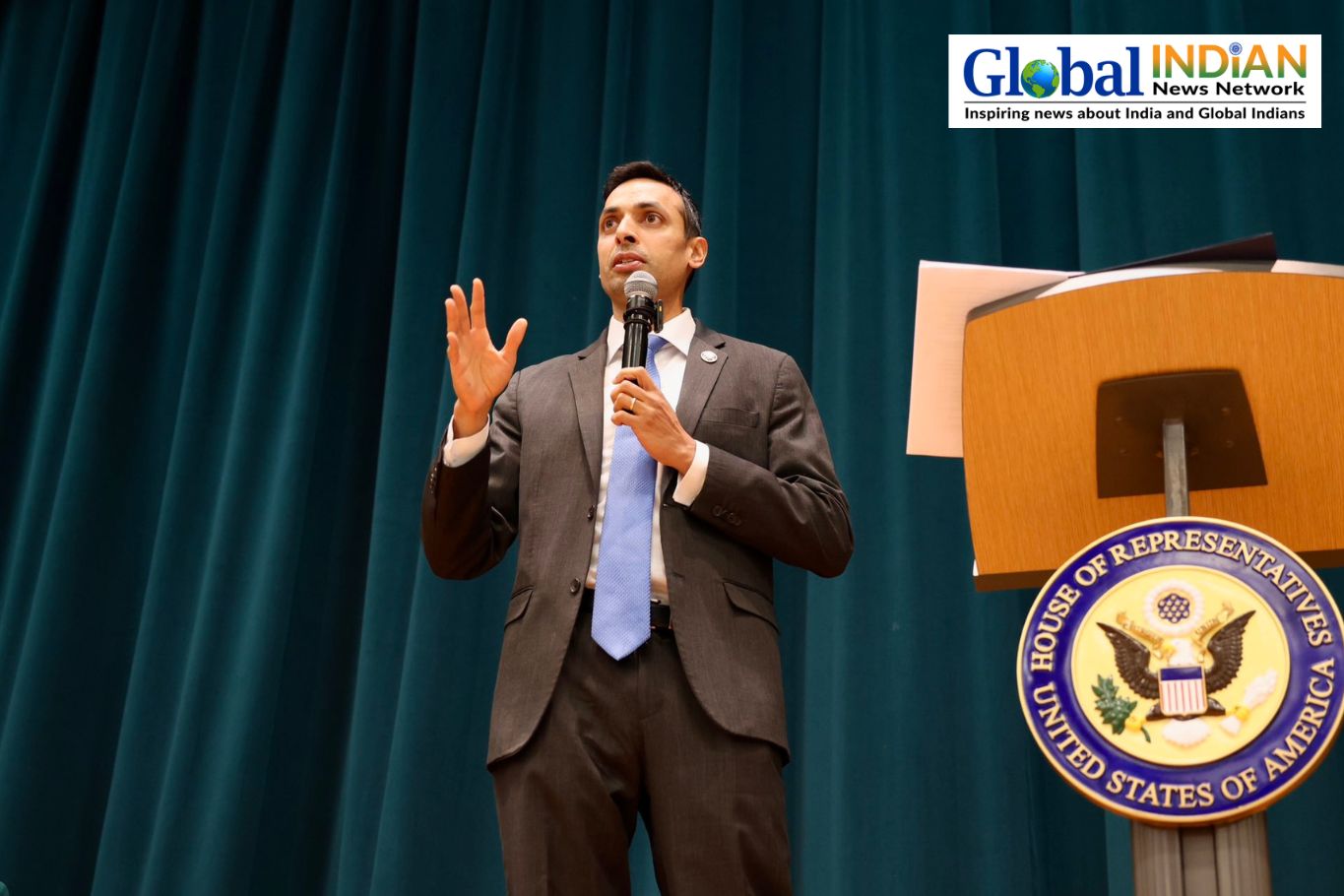
 Indian Americans were celebrated as one of the most powerful forces connecting the United States and India during a high-profile Congressional hearing, even as lawmakers issued sharp criticisms of the Trump administration’s tightening immigration rules and visa policies. The House Foreign Affairs Subcommittee on South and Central Asia convened on Wednesday to assess the state of the US–India strategic partnership, and throughout the session, the diaspora’s economic and social contributions took center stage.
Committee Chairman Bill Huizenga opened the hearing by stressing that more than 5 million Indian Americans serve as a backbone for the U.S. economy. He highlighted their leadership in major corporations, service in the military, and influence across technology and research fields. Calling the community a “living bridge of democratic values and shared opportunity,” Huizenga said the relationship between the two nations is grounded not only in diplomacy but in everyday people-to-people connections. He also introduced a letter from the Indo-American Chamber of Commerce reinforcing this sentiment and praising the committee’s focus.
Economic data presented by Dhruva Jaishankar of ORF America underscored the magnitude of these contributions. According to his testimony, Indian-origin entrepreneurs, students, medical professionals, and researchers collectively generate more than $200 billion in economic activity and support at least 830,000 jobs across all U.S. states and territories.
Despite these achievements, lawmakers expressed serious concern over recent immigration and tariff changes. Representative Sydney Kamlager-Dove condemned the administration’s decision to impose a $100,000 fee on H-1B visas—most of which are issued to Indian professionals. She described the move as dismissive of the exceptional contributions Indians have made to U.S. innovation and economic leadership, warning that such policies undermine long-standing goodwill.
Representative Pramila Jayapal, the first Indian American woman elected to Congress, offered an emotional testimony based on her own experience navigating student and H-1B visas. She cautioned that legal immigration pathways are rapidly closing, while reports of “anti-Indian hate” continue to rise. She noted that businesses in her district say recent tariff hikes pose “the biggest threat to their operations in over 120 years.” Jayapal also voiced concerns that such punitive measures could push India toward blocs like BRICS and the SCO, weakening U.S. influence.
Sameer Lalwani added that hostility toward Indian students, researchers, and tech workers could damage America’s innovation edge. Turning away talent, he warned, harms U.S. competitiveness more than it protects it.
The hearing made clear that the Indian American community remains one of the strongest pillars of the bilateral partnership — and also one of the most exposed to shifts in U.S. immigration and economic policy.