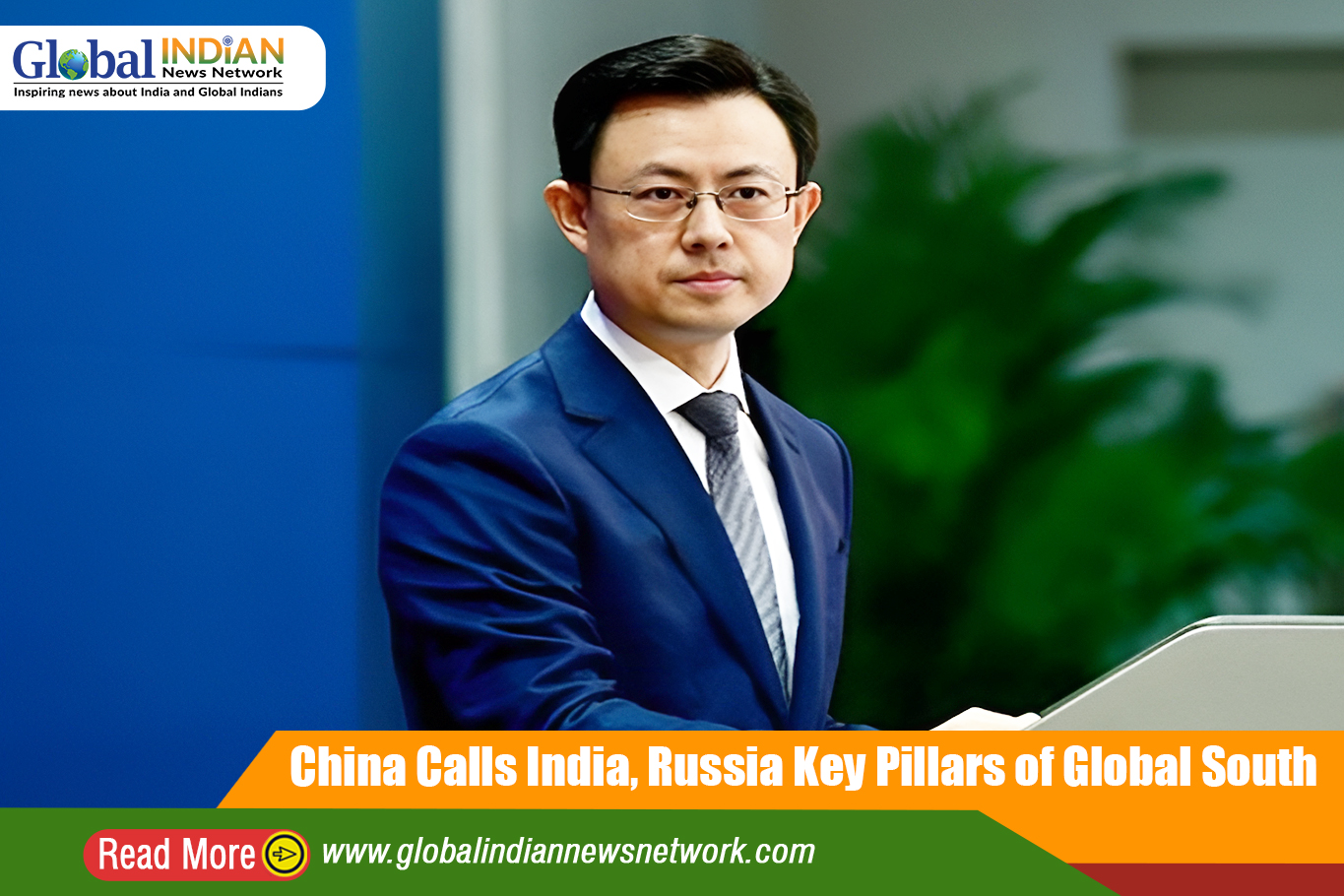
 China has described India, Russia and itself as key emerging economies and important members of the Global South, stressing that strong relations among the three will help advance regional and global stability. Speaking at a regular press briefing, Chinese Foreign Ministry spokesperson Guo Jiakun said cooperation between the nations aligns with their long-term interests and supports wider peace and development efforts.
Guo noted that China is prepared to work with both India and Russia to advance bilateral ties and manage relations through a strategic and long-term approach. He said Beijing seeks steady and healthy ties with New Delhi, aimed at benefiting both peoples and contributing to broader Asian and global prosperity.
Responding to questions on Russian President Vladimir Putin’s recent visit to India and his remarks on China–India relations, Guo reiterated that constructive ties among the three major economies are beneficial for the wider international system. He emphasised China’s willingness to coordinate with both sides to promote stability, economic cooperation and mutual trust.
Putin’s two-day visit to New Delhi included extensive discussions with Prime Minister Narendra Modi, marking twenty-five years of the India–Russia Strategic Partnership. The leaders held summit-level talks covering defence collaboration, trade and investment, energy cooperation and regional security. The discussions culminated in the 23rd India–Russia Annual Summit, where both sides released a joint statement identifying priorities for future engagement.
During his trip, the Russian President was also hosted by President Droupadi Murmu at a ceremonial banquet in Rashtrapati Bhavan. She described the India–Russia relationship as long-standing and steadfast, expressing confidence that it would continue to strengthen in the years ahead.
China’s remarks signal Beijing’s interest in maintaining balanced ties with both Moscow and New Delhi despite ongoing complexities in the China–India relationship. The emphasis on strategic engagement and cooperation reflects the broader geopolitical shifts driving coordination among major Asian powers within the Global South framework.