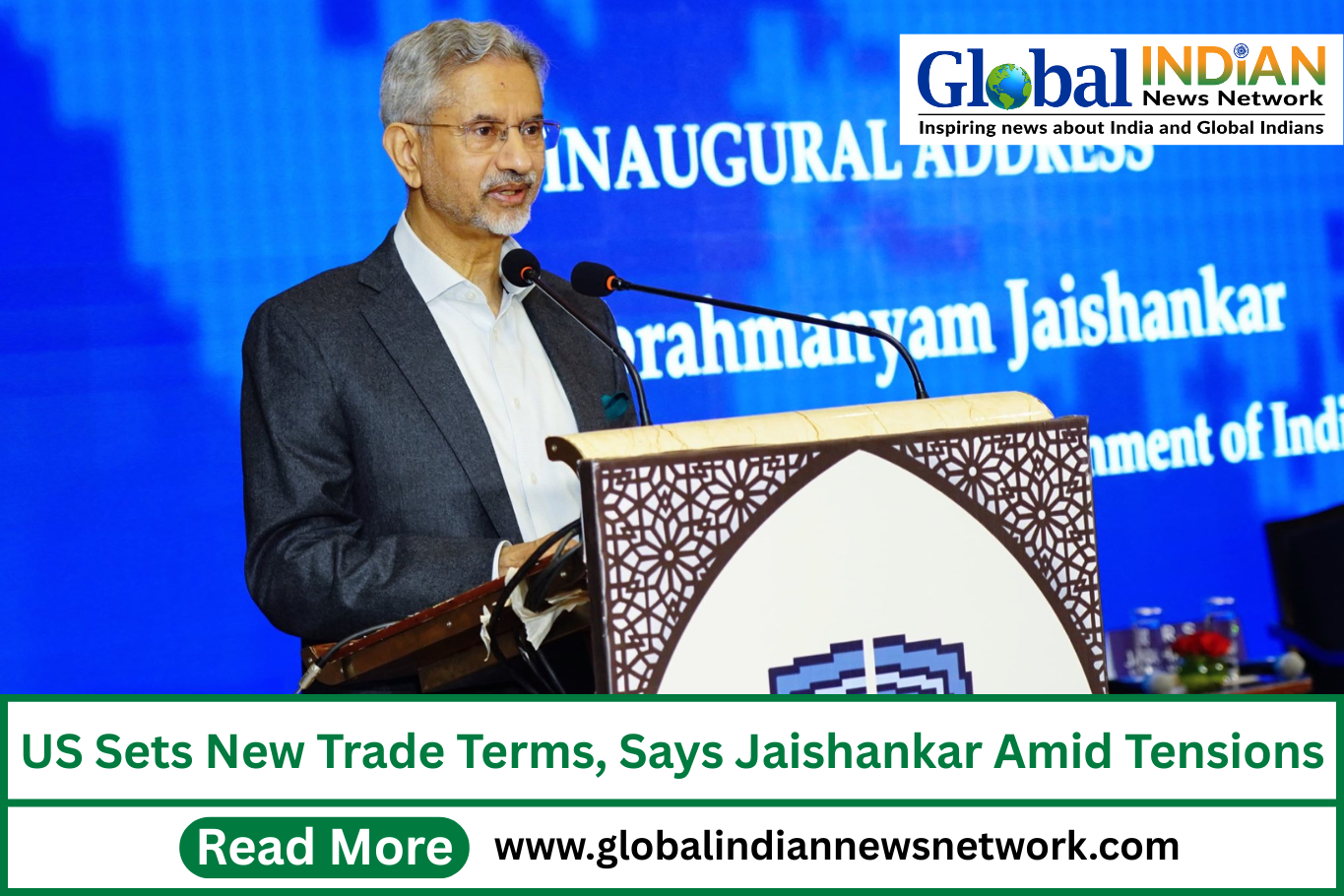
 External Affairs Minister S Jaishankar on Saturday highlighted how global dynamics have shifted, arguing that political considerations increasingly outweigh economic logic in today’s world. Speaking at IIM-Calcutta after receiving an Honorary Doctorate, he said the growing unpredictability in international affairs makes it essential for India to diversify its supply sources to secure national needs.
Jaishankar noted that the United States, which once played a central stabilizing role in the global order, has changed its approach by dealing with countries individually rather than through broad multilateral frameworks. India and the US currently have two ongoing trade discussions — a framework deal focused on tariff issues and a broader comprehensive agreement.
Turning to China, Jaishankar remarked that Beijing has long followed its own playbook and continues to operate by rules that benefit its strategic interests. With a third of global manufacturing concentrated in China, he said the world is increasingly focused on supply chain reliability and resilience, especially as conflicts and climate disruptions pose new risks.
He explained that nations everywhere are responding to fragmentation, geopolitical pressures, and supply challenges by preparing for every possible scenario. India, he said, has been making rapid progress in modern infrastructure — including highways, rail networks, ports, aviation, energy, and power — narrowing the gap with some of Asia’s most developed economies.
Jaishankar emphasized that India’s advancements have not gone unnoticed globally. As the country aims to become a fully developed economy by 2047, the government is pursuing new trade partnerships and improving connectivity based on strategic and economic priorities. He stressed that India’s trade vision will continue to be centered on people’s interests and long-term national growth.
The minister also said that India’s increasing engagement with the Global South has strengthened its diplomatic standing, giving it greater leverage in international forums. He argued that a nation with India’s ambitions must possess a strong industrial base, and that promoting manufacturing remains a critical priority.
Referring to the government’s “Make in India” focus during the last decade, Jaishankar said the initiative reflects a renewed confidence and a more ambitious approach to economic development. India, he added, is now investing heavily in advanced technologies — from semiconductors and electric vehicles to drones, space innovation, nanotechnology, and biosciences. These sectors, he noted, offer India the chance to leapfrog older models and build unique global capabilities.