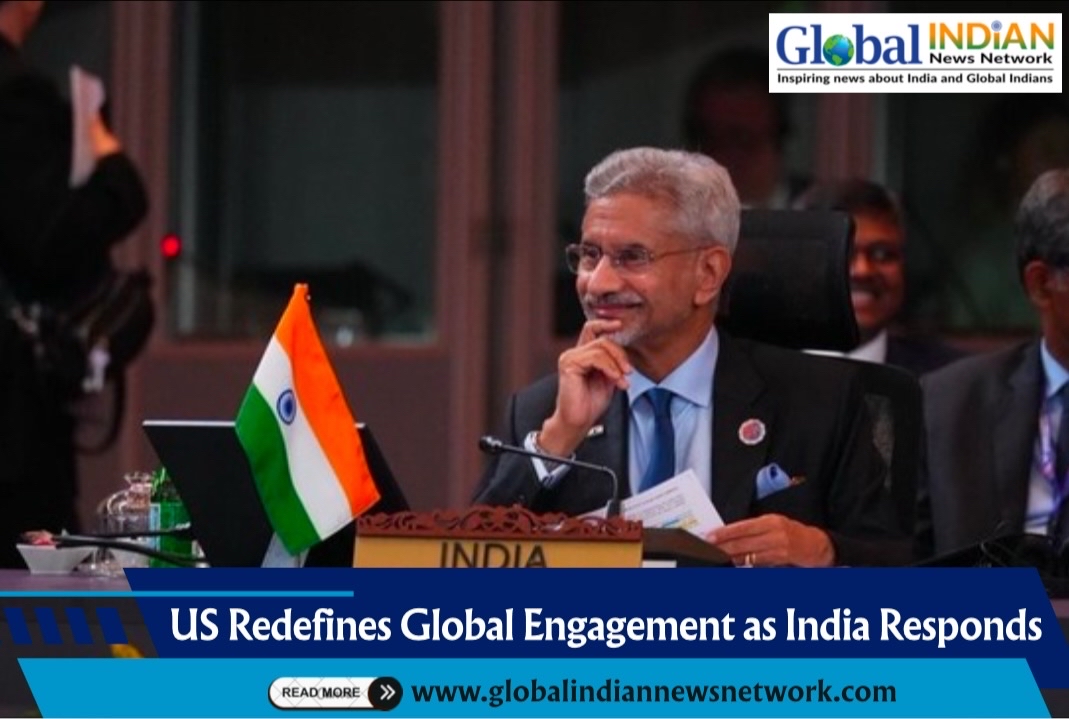
 External Affairs Minister S. Jaishankar emphasized that the United States has dramatically changed how it positions itself on the global stage, marking a major shift in Washington’s foreign policy playbook. Receiving an Honorary Doctorate from IIM-Calcutta on November 29, he noted that the US is now approaching countries individually rather than relying on the multilateral structures it once championed. This move, he said, represents “entirely new terms of engagement” that are prompting nations worldwide to reassess how they protect their strategic interests.
Jaishankar explained that this altered diplomatic environment is increasingly shaped by politics overshadowing economics. According to him, the dominance of political considerations has become a defining feature of today’s world, where unpredictability often outweighs stability. In this context, he stressed that India must continue widening the range of its suppliers so that national priorities remain insulated from global shocks.
As part of its evolving relationship with Washington, India is currently navigating two separate negotiation tracks. One involves discussions on a framework agreement focused on tariff-related issues, while the other explores a broader, more expansive trade arrangement. Jaishankar indicated that these simultaneous conversations reflect the wider adjustments both nations are making as geopolitical realities change.
He also remarked on China’s long-standing tendency to operate outside widely accepted norms. China’s approach, he said, forces other countries to constantly weigh the balance between open rivalry and discreet compromises. With globalization being challenged by fragmentation, economic risk, and growing insecurities around supply chains, many nations are choosing to hedge their bets, creating strategies that allow them to survive in a less predictable world.
Despite these complexities, Jaishankar highlighted that India is steadily advancing and drawing increasing attention on the global platform. The country’s progress, he noted, aligns with the government’s long-term ambition of transforming India into a developed nation by 2047. Foreign policy, he added, plays a crucial role in enabling this transformation by expanding India’s presence and influence abroad.
A key element of India’s external outreach, he said, is its strong connection with the Global South. This partnership not only strengthens India’s moral leadership but also provides a solid base for enhancing its diplomatic, economic, and strategic engagements worldwide.