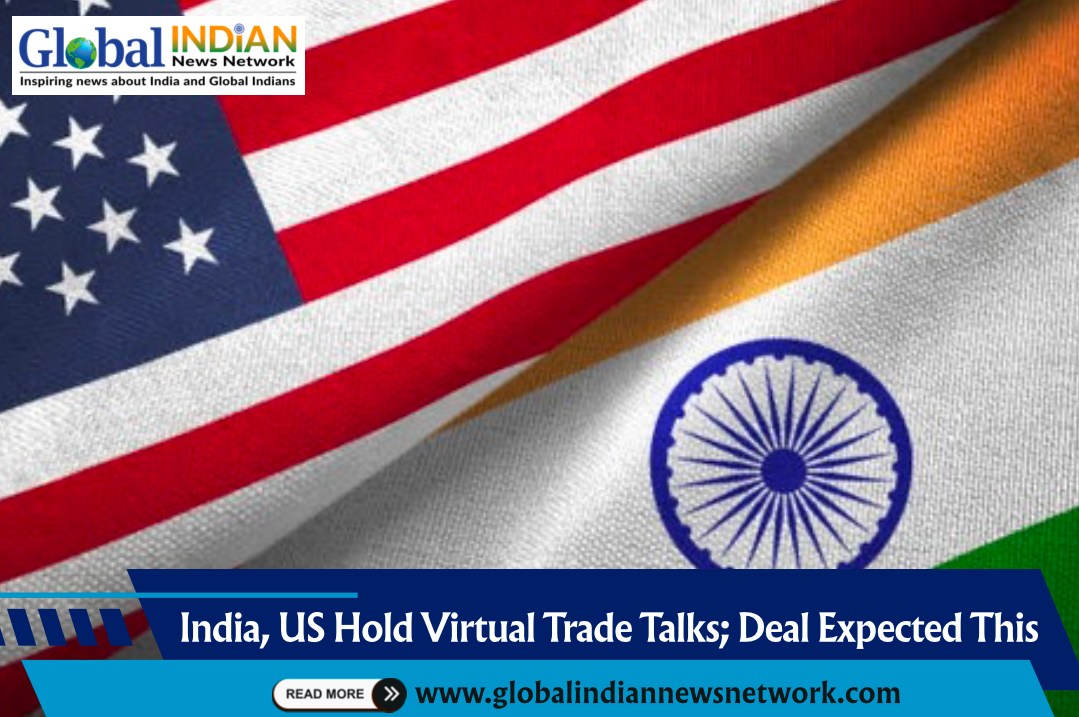
 India and the United States are holding virtual trade discussions on a frequent and consistent basis, Commerce Secretary Rajesh Agarwal said on Friday, expressing confidence that New Delhi may be able to finalize the long-awaited trade agreement with Washington before the end of the year. Agarwal noted that most key concerns have already been addressed and only a few issues remain open.
Speaking at FICCI’s 98th Annual General Meeting in New Delhi, the Commerce Secretary highlighted that the global trade environment has shifted significantly since negotiations for the Bilateral Trade Agreement (BTA) first began. He added that any remaining points of friction between the two countries could likely be resolved through political-level engagement if required.
Agarwal revealed that India is negotiating two parallel frameworks with the United States—one covering the broader trade agreement and another specifically targeting the reciprocal tariffs that were imposed during former President Donald Trump’s tenure. The tariff-related pact includes the 25% duties applied on various Indian exports as well as the separate 25% tariff on oil shipments from India. According to him, a final agreement on this tariff package would be especially beneficial for India, as removing these elevated duties would help boost export competitiveness.
India’s exports to the United States this year are already $10 billion higher compared to the previous year, Agarwal said, emphasizing that the bilateral relationship has strengthened steadily over the past two decades.
On the issue of trade imbalance, Agarwal clarified that India is not currently concerned about the size of its trade deficit, as the situation remains within manageable limits.
New Delhi is still awaiting Washington’s formal response to the proposed bilateral trade package, the first phase of which both sides initially hoped to complete earlier in the year. The timeline stretched after the United States introduced 50% tariffs on a wide range of Indian exports starting August 27—half of which is tied to India’s continued purchase of Russian energy supplies. These duties are expected to impact roughly $48.2 billion worth of Indian goods based on 2024 export data.
To enhance market access in the United States, India is pushing for lower tariffs on labor-intensive product categories such as textiles, leather goods, gems and jewelry, plastics, chemicals, and select agricultural commodities. Meanwhile, Washington is seeking tariff concessions from India on electric vehicles, automobiles, certain industrial goods, wines, petrochemicals, dairy products, apples, tree nuts, and genetically modified crops.
With momentum building on both sides, officials remain optimistic that a breakthrough is within reach before the year concludes.
India, US Hold Virtual Trade Talks; Deal Expected This

Shradhanjali Mukherjee
Salina Shah
Related Posts