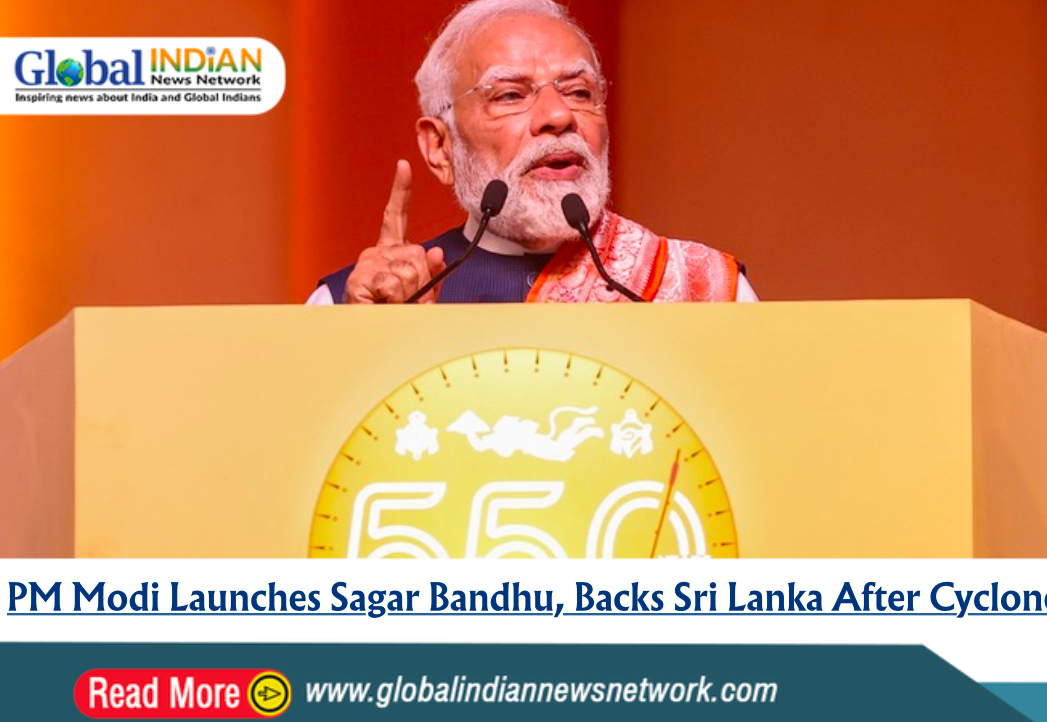
 Prime Minister Narendra Modi on Friday extended his condolences to the people of Sri Lanka as the island nation grapples with the destruction caused by Cyclone Ditwah. Offering solidarity during the crisis, Modi announced that India has dispatched essential relief supplies and Humanitarian Assistance and Disaster Relief (HADR) support through Operation Sagar Bandhu.
In a message shared on X, Modi expressed deep sorrow for the lives lost and urged strength for families affected by the cyclone’s fury. He emphasized that India, guided by the “Neighbourhood First” policy and Vision MAHASAGAR, stands firmly with Sri Lanka during this difficult moment. Modi added that India is prepared to extend additional assistance as the situation develops.
External Affairs Minister S. Jaishankar confirmed that Indian Naval Ship INS Vikrant along with INS Udaigiri delivered emergency supplies in Colombo as Operation Sagar Bandhu officially began. He noted that more actions are underway to support ongoing relief operations.
Sri Lanka’s Disaster Management Centre (DMC) has reported alarming losses, with 56 deaths, 14 injuries, and 21 missing persons linked to the severe weather events triggered by Cyclone Ditwah. Local media revealed that nearly 44,000 people, belonging to more than 12,300 families, have been directly affected across multiple districts. The storm has destroyed four homes and partially damaged more than 660 houses, leaving thousands seeking shelter.
The country remains under intense rainfall, rising floodwaters, and recurring landslides, which continue to disrupt daily life. Travel operations have also been hit: airport authorities stated that 15 inbound flights were diverted from Bandaranaike International Airport due to unsafe weather, with aircraft redirected to Mattala Rajapaksa International Airport, Trivandrum, and Cochin.
Meanwhile, the India Meteorological Department (IMD) issued a cyclone alert for north Tamil Nadu, Puducherry, and parts of south Andhra Pradesh. As of Friday morning, the cyclone was located near Sri Lanka’s eastern coast, moving north-northwest at around 10 kmph. The system is expected to reach the southwest Bay of Bengal near the Indian coastline by early November 30, prompting heightened preparedness across coastal regions.