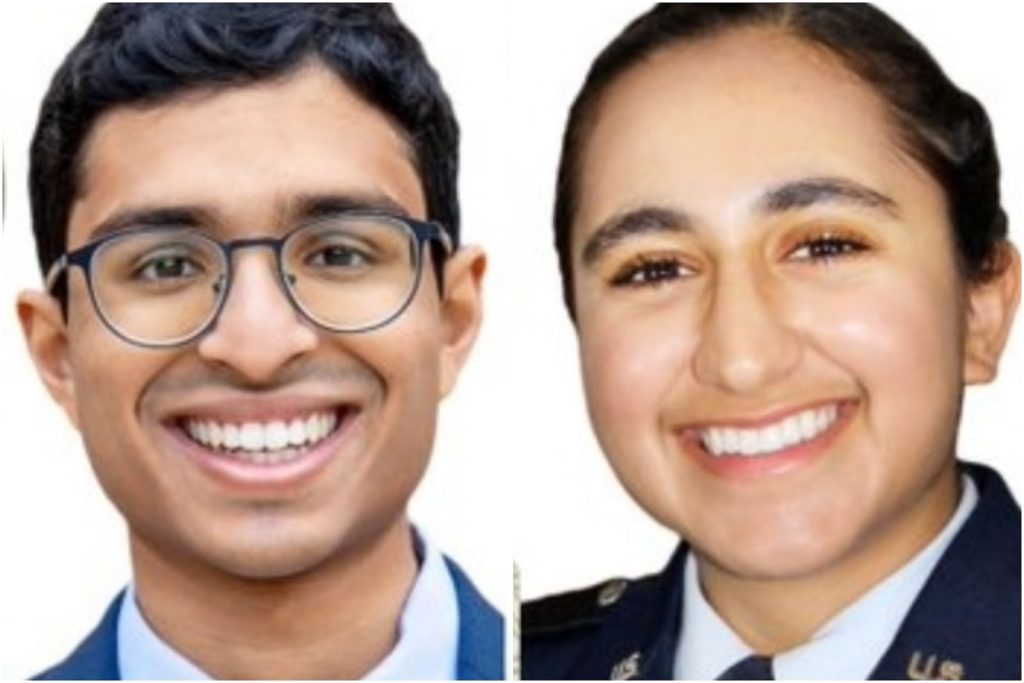
Jupneet Singh and Sreekar Mantena, two Indian American students at Harvard Medical School, have been awarded the esteemed Paul & Daisy Soros Fellowships for New Americans. Their selection continues a long-standing tradition of excellence among Indian American scholars in this highly competitive graduate scholarship program.
Established in 1997, the Soros Fellowships provide support to immigrants and their children as they pursue graduate studies in the United States. This year’s winners, Singh and Mantena, not only stand out for their academic promise but also for how their backgrounds and work intersect with broader social causes.
Singh has made history as the first woman Soros Fellow serving in the U.S. military and the first female Air Force ROTC Rhodes Scholar. Her path combines a commitment to public service with medical education. She has also led de-addiction initiatives in Punjab and worked with domestic violence support programs, using her platform to address issues across borders.
Mantena, meanwhile, is leveraging data science and machine learning to address health inequities. His nonprofit, which develops medical technologies for underserved communities, reflects his broader mission to bridge cutting-edge tech with equitable healthcare access.
Both students credit their Indian heritage for shaping their values and ambitions. Singh draws strength from her Punjabi and Sikh upbringing, while Mantena recalls formative experiences spent with his grandparents in Southern India. This cultural grounding appears frequently among Indian American Soros Fellows, suggesting a strong link between cultural identity and perseverance in academic environments.
Their achievements underscore a growing trend: immigrant and second-generation American students are not only excelling in higher education but are also redefining the intersection of professional expertise and community service. The Soros Fellowship’s emphasis on empowering “New Americans” has enabled rising leaders like Singh and Mantena to bring fresh, culturally rooted perspectives to medicine and social innovation.
Their stories offer a glimpse into how immigrant communities, particularly Indian Americans, are leveraging educational platforms to craft careers that balance personal success with meaningful societal impact. As Singh and Mantena continue their journeys, they represent the evolving face of American academia—diverse, mission-driven, and globally connected.